| About Us |
| News |
| Announcement |
| Research |
| Conservation & Horticulture |
| Public Education |
| Graduate Study |
| Scientist |
| International Cooperation |
| Resources |
| Annual Reports |
| Publications & Papers |
| Visit XTBG |
| Societies |
| XTBG Seminar |
| Open Positions |
| 4th XSBN Symposium |
| CAS-SEABRI |
| PFS-Tropical Asia |
| Links |
| Location:Home > Research > Research Divisions > CAS Key Laboratory of Tropical Plant Resource and Sustainable Use |
| Group of Molecular Breeding of Energy Plants |
|


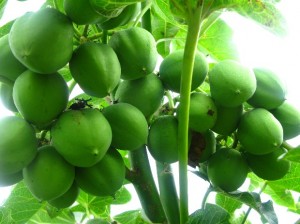
Head of research group: Prof. Dr. XU Zengfu E-mail: zfxu@xtbg.ac.cn Website: http://mbep.groups.xtbg.ac.cn/ Research interests 1. Functional genomics and molecular breeding of biodiesel feedstock plants Production of renewable biofuels with energy plants can help us to reduce the dependence on fossil fuels. One of the promising biodiesel feedstock plants is Jatropha curcas (Jatropha), which is a non-edible, tropical and subtropical shrub of the family Euphorbiaceae with strong adaptability to drought and impoverished soil. Jatropha seeds contain high amounts of oil (up to 40%) that has the similar characteristics to those of fossil diesel and can be processed to produce high-quality biodiesel. The research program of the laboratory focuses on floral sex determination, flower and seed development, and oil (triacylglycerol) biosynthesis in Jatropha. Our goal is to improve Jatropha seed yield and oil content through genomic and genetic engineering approaches combined with the application of state-of-the-art techniques in biochemistry, molecular and cell biology, biotechnology, and traditional breeding, and to develop Jatropha as a model plant for energy plant research. 2. Transgenic plant bioreactors for recombinant pharmaceutical proteins Transgenic plant bioreactors have emerged as a convenient, safe and economical alternative to microbial and animal cell expression systems or transgenic animals for the production of clinically useful recombinant pharmaceutical proteins in large amounts. Transgenic plant bioreactors have the advantages of having post-translational modifications, lacking of contamination by human or animal pathogens and easy for scale-up. One of the major obstacles in the plant bioreactors is the low yield of recombinant proteins, which are susceptible to proteolytic degradation in transgenic plant cells. Therefore, reducing protease activity in transgenic plant cells is one of the potential approaches to improve the yield of recombinant proteins. A project funded by the National High Technology Research and Development Program of China (863 Program) is aimed to reduce the proteolytic degradation of recombinant proteins in plant cell suspension cultures by silencing of the genes encoding the major proteases in plant cells and/or inhibition of the proteolytic activities by co-expression of protease inhibitors.
Selected Publications
10. Mao-Sheng Chen, Bang-Zhen Pan, Gui-Juan Wang, Jun Ni, Longjian Niu and Zeng-Fu Xu*. 2014. Analysis of the transcriptional responses in inflorescence buds of Jatropha curcas exposed to cytokinin treatment. BMC Plant Biology 14: 318. 11. Bang-Zhen Pan, Mao-Sheng Chen, Jun Ni and Zeng-Fu Xu*.2014. Transcriptome of the inflorescence meristems of the biofuel plant Jatropha curcas treated with cytokinin. BMC Genomics.15: 974. DOI:10.1186/1471-2164-15-974 12. Qiantang Fu, Longjian Niu, Qingfeng Zhang, Bang-Zhen Pan, Huiying He, Zeng-Fu Xu*. 2014. Benzyladenine treatment promotes floral feminization and fruiting in a promising oilseed crop Plukenetia volubilis. Industrial Crops and Products. 59: 295–298. DOI:10.1016/j.indcrop.2014.05.028 13. Yan-Bin Tao, Li Luo, Liang-Liang He, Jun Ni and Zeng-Fu Xu*. 2014 A promoter analysis of MOTHER OF FT AND TFL1 1 (JcMFT1), a seed-preferential gene from the biofuel plant Jatropha curcas. Journal of Plant Research.127(4): 513-524. DOI: 10.1007/s10265-014-0639-x 14. Chaoqiong Li, Li Luo, Qiantang Fu, Longjian Niu and Zeng-Fu Xu*. 2014 Isolation and functional characterization of JcFT, a FLOWERING LOCUS T (FT) homologous gene from the biofuel plant Jatropha curcas. BMC Plant Biology, 14:125, DOI: 10.1186/1471-2229-14-125. 15. Longjian Niu, Jialong Li, Mao-Sheng Chen, Zeng-Fu Xu*. 2014 Determination of oil contents in Sacha inchi (Plukenetia volubilis) seeds at different developmental stages by two methods: Soxhlet extraction and time-domain nuclear magnetic resonance. Industrial Crops and Products. 56, 187–190. 16. Lu Zhang, Liang-Liang He, Qian-Tang Fu, Zeng-Fu Xu* 2013 Selection of reliable reference genes for gene expression studies in the biofuel plant Jatropha curcas using real-time quantitative PCR. International Journal of Molecular Sciences, 14(12), 24338-24354. 17. Yaling Song*, Zeng-Fu Xu. 2013. Ectopic overexpression of an AUXIN/INDOLE-3-ACETIC ACID (Aux/IAA) gene OsIAA4 in rice induces morphological changes and reduces responsiveness to auxin. International Journal of Molecular Sciences 14(7), 13645-13656 18. S. A. Omar, N. I. Elsheery, H. M. Kalaji*, M. K. H. Ebrahim, S. Pietkiewicz, C.H. Lee, S. I. Allakhverdiev*, and Zeng-Fu Xu*. 2013. Identification and differential expression of two dehydrin cDNAs during maturation of Jatropha curcas seeds. Biochemistry (Moscow), 78(5):485-495. 19. Song, J., Chen, M.-S., Li J.-L., Niu, L.-J., Xu, Z.-F.* (2013). Effects of soil-applied paclobutrazol on the vegetative and reproductive growth of biofuel plant Jatropha curcas. Plant Diversity and Resources 35 (2): 173-179 20. Pi, X.-J., Pan, B.-Z., Xu, Z.-F.* (2013). Induction of bisexual flowers by gibberellin in monoecious biofuel plant Jatropha curcas (Euphorbiaceae). Plant Diversity and Resources 35 (1): 26-32. 21. Omar, S.A., Elsheery, N.I., Kalaji, H.M., Xu, Z.-F.*, Song, S.Q*., Carpentier, R., Lee, C.H., and Allakhverdiev, S.I. (2012). Dehydroascorbate Reductase and Glutathione Reductase Play an Important Role in Scavenging Hydrogen Peroxide during Natural and Artificial Dehydration of Jatropha curcas Seeds. Journal of Plant Biology 55 (6): 469-480. 22. Luo, M., Ding, L.-W., Ge, Z.-J., Wang, Z.-Y., Hu, B.-L., Yang, X.-B., Sun, Q.-Y., Xu, Z.-F*. (2012). The Characterization of SaPIN2b, a Plant Trichome-Localized Proteinase Inhibitor from Solanum americanum. International Journal of Molecular Sciences 13 (11): 15162-15176. 23. Mao-Sheng Chen, Gui-Juan Wang, Ru-Ling Wang, Jun Wang, Song-Quan Song*, Zeng-Fu Xu*. 2011. Analysis of expressed sequence tags from biodiesel plant Jatropha curcas embryos at different developmental stages. Plant Science. 181(6): 696-700. 24. Samar A. Omar, Qian-Tang Fu, Mao-Sheng Chen, Gui-Juan Wang, Song-Quan Song, Nabil I. Elsheery, Zeng Fu Xu*. 2011. Identification and expression analysis of two small heat shock protein cDNAs from developing seeds of biodiesel feedstock plant Jatropha curcas. Plant Science. 181(6): 632-637. 25. Yu-Juan Zhong, Jun-Chao Huang*, Jin Liu, Yin Li, Yue Jiang, Zeng-Fu Xu, Gerhard Sandmann, and Feng Chen*. 2011 Functional characterization of various algal carotenoid ketolases reveals that ketolating zeaxanthin efficiently is essential for high production of astaxanthin in transgenic Arabidopsis. Journal of Experimental Botany. 62 (10): 3659-3669. 26. Qiao-Yang Sun; Ling-Wen Ding; George P. Lomonossoff; Yong-Bing Sun; Ming Luo; Chao-Qiong Li; Liwen Jiang; Zeng Fu Xu*. 2011. Improved expression and purification of recombinant human serum albumin from transgenic tobacco suspension culture. Journal of Biotechnology. 155(2):164-172 27. Bang-Zhen Pan, Zeng-Fu Xu*. 2011, Benzyladenine treatment significantly increases the seed yield of the biofuel plant Jatropha curcas. Journal of Plant Growth Regulation, 30(2), 166-174. 28. Jingli Pan, Qiantang Fu, Zeng-Fu Xu*. 2010. Agrobacterium tumefaciens-mediated transformation of biofuel plant Jatropha curcas using kanamycin selection. African Journal of Biotechnology, 9(39): 6477-6481 29. Jun-Li Shao, Yue-Sheng Long, Gu Chen, Jun Xie, Zeng-Fu Xu*. 2010. The reversed terminator of octopine synthase gene on the Agrobacterium Ti plasmid has a weak promoter activity in prokaryotes. Molecular Biology Reports, 37(5): 2157-2162 30. Wang, H., Tse, Y.C., Law, A.H.Y., Sun, S.S.M., Sun, Y.B., Xu, Z.F., Hillmer, S., Robinson, D.G., Jiang, L.W*. (2010). Vacuolar sorting receptors (VSRs) and secretory carrier membrane proteins (SCAMPs) are essential for pollen tube growth. Plant J 61 (5): 826-838. 31. Fu, L., Miao, Y., Lo, S., Seto, T., Sun, S., Xu, ZF., Clemens, S., Clarke, L., Kermode, A., and Jiang, L*. 2009. Production and characterization of soluble human lysosomal enzyme-iduronidase with high activity from culture media of transgenic tobacco BY-2 cells. Plant Science 177(6): 668-675. 32. Qiao-Yang Sun, Ling-Wen Ding, Liang-Liang He, Yong-Bin Sun, Jun-Li Shao, Ming Luo, Xu Z.-F.*. 2009. Culture of Escherichia coli in SOC medium improves the cloning efficiency of toxic protein genes. Analytical Biochemistry 394 (1) 144–146. 33. Li A.-M., Yu B.-Y., Chen F.-H., Gan H.-Y., Yuan J.-G., Qiu R., Huang J.-C., Yang Z.-Y., Xu, Z.-F*. 2009. Characterization of the Sesbania rostrata Phytochelatin Synthase Gene: Alternative Splicing and Function of Four Isoforms. International Journal of Molecular Sciences 10(8): 3269-3282. 34. Wang JQ, Suen PK, Xu ZF, and Jiang L*. 2009. A 64-kDa Sucrose Binding Protein is Membrane-associated and Tonoplast-localized in Developing Mung Bean Seeds. Journal of Experimental Botany 62(2): 629-639. 35. Luo M, Wang Z, Li H, Xia KF, Cai Y, and Xu, Z.-F*. 2009. Overexpression of a Weed (Solanum americanum) Proteinase Inhibitor in Transgenic Tobacco Results in Increased Glandular Trichome Density and Enhanced Resistance to Helicoverpa armigera and Spodoptera litura. International Journal of Molecular Sciences, 10(4): 1896-1910. 36. Wang RL, Peng SL*, Zeng RS, Ding LW, and Xu ZF. 2009. Cloning, expression and wounding induction of β-caryophyllene synthase gene from Mikania micrantha H.B.K. and allelopathic potential of β-caryophyllene. Allelopathy Journal 24 (1): 35-44. 37. Ding LW, Sun QY, Wang ZY, Sun YB, and Xu, Z.-F*. 2008. Using silica particles to isolate total RNA from plant tissues recalcitrant to extraction in guanidine thiocyanate. Analytical Biochemistry 374(2): 426-428. 38. Miao YS, Ding Y, Sun QY, Xu ZF, and Jiang L*. 2008. Plant bioreactors for pharmaceuticals. Biotechnology and Genetic Engineering Reviews 25: 363-380. 39. Wang RL, Ding LW, Sun QY, Li J, Xu ZF*, and Peng SL*. 2008. Genome sequence and characterization of a new virus infecting Mikania micrantha H.B.K. Archives of Virology 153(9): 1765-1770. 40. Wang ZY, Ding LW, Ge ZJ, Wang Z, Wang F, Li N, and Xu ZF*. 2007. Purification and characterization of native and recombinant SaPIN2a, a plant sieve element-localized proteinase inhibitor. Plant Physiology and Biochemistry 45: 757-766. 41. Miao Y, Yang M, Li KY, Suen PK, Shao J, Xu ZF, and Jiang L*. 2007. Molecular Characterization of Plant Vacuolar Sorting Receptor (VSR) Proteins. Functional Plant Science and Biotechnology 1(2): 254-260. 42. Lao Y, Zhang X, Zhou J, Wang Y, Chen R, Su W*, Zhou W, and Xu ZF*. 2007. Characterization and in vitro mineralization function of a soluble protein complex P60 from the nacre of Pinctada fucata. Comparative Biochemistry and Physiology B 148: 201-208. 43. Xie J, Ouyang XZ, Xia KF, Huang YF, Pan WB, Cai YP, Xu X, Li B, and Xu ZF*. 2007. Chloroplast-like organelles were found in enucleate sieve elements of transgenic plants overexpressing a proteinase inhibitor. Bioscience, Biotechnology, and Biochemistry 71 (11): 2759–2765. 44. Wei JY, Li AM, Li Y, Wang J, Liu XB, Liu LS, and Xu ZF*. 2006. Cloning and characterization of a RNase-related protein gene preferentially expressed in rice stems. Bioscience, Biotechnology, and Biochemistry 70(4): 1041-1045. 45. Chye ML*, Sin SF, Xu ZF, and Yeung EC. 2006. Serine proteinase inhibitor proteins: exogenous and endogenous functions. In Vitro Cellular & Development Biology-Plant 42(2): 100-108. 46. Liu J, Xia KF, Zhu JC, Deng YG, Huang XL, Hu BL, Xu X, and Xu ZF*. 2006. The nightshade proteinase inhibitor IIb gene is constitutively expressed in glandular trichomes. Plant and Cell Physiology 47(9): 1274-1284. 47. Rawat R, Xu ZF, Yao KM, and Chye ML*. 2005. Identification of cis-elements in ethylene and circadian regulation of gene encoding Solanum melongena cysteine proteinase. Plant Molecular Biology 57(5): 629-643. 48. Xu ZF, Teng WL, and Chye ML*. 2004. Inhibition of endogenous trypsin- and chymotrypsin-like activities in transgenic lettuce expressing heterogeneous proteinase inhibitor SaPIN2a. Planta 218(4): 623-629. 49. Xu ZF, Chye ML*, Li HY, Xu FX, and Yao KM. 2003. G-box binding coincides with increased Solanum melongena cysteine proteinase gene expression in senescent fruits and circadian-regulated leaves. Plant Molecular Biology 51: 9-19. 50. Yu RMK, Zhou Y, Xu ZF, Chye ML, and Kong RYC*. 2003. Two genes encoding protein phosphatase 2A catalytic subunits are differentially expressed in rice. Plant Molecular Biology 51: 295-311. 51. Wong WS, Li GG, Ning W, Xu ZF, Hsiao WL, Zhang LY, and Li N*. 2001. Repression of chilling-induced ACC accumulation in transgenic citrus by overproduction of antisense 1-aminocyclopropane-1-carboxylate synthase RNA. Plant Science 161: 969-977. 52. Xu ZF, Qi WQ, Ouyang XZ, Yeung E. and Chye ML*. 2001. A proteinase inhibitor II of Solanum americanum is expressed in phloem. Plant Molecular Biology 47: 727-738. |

| Appendix Download |
|
|
