Phoebe zhennan is a Chinese endemic and valuable timber species of Phoebe (Lauraceae). It is known for its fragrant, high-value wood and is the primary source of the renowned “golden-thread nanmu.”
In a study published in Integrative Conservation, researchers from Xishuangbanna Tropical Botanical Garden (XTBG) provide the first chromosome-level genome of Phoebe zhennan, serving as an essential foundation for its genetic conservation and breeding programs.
They report a high-contiguity, chromosome-level genome assembly for this prized species. The assembly shows a high level of completeness (99%) based on BUSCO assessment, providing a robust foundation for subsequent genome annotation and comparative analyses.
Whole-genome duplication (WGD) analysis revealed that P. zhennan has undergone two WGD events: an older one shared by Magnoliales and Laurales, and a younger one shared by Lauraceae and Calycanthaceae species. Phylogenetic analysis showed that magnoliids (together with Chloranthales) form a sister clade to monocots.
They identified key genes—particularly a master regulator, PzMYB6—that control lignin synthesis, the process that makes wood strong and durable. This discovery opens possibilities for molecular breeding to improve wood quality.
The genomic resources presented in this study hold significant value not only for elucidating the genome evolution of Lauraceae but also for supporting genetic conservation, resource restoration, and sustainable use of P. zhennan.
“The genomic data can be used to assess genetic diversity and wild population health, design effective nature reserves, and develop genetic markers to assist in selecting superior trees for reforestation and sustainable cultivation,” said LI Jie of XTBG.
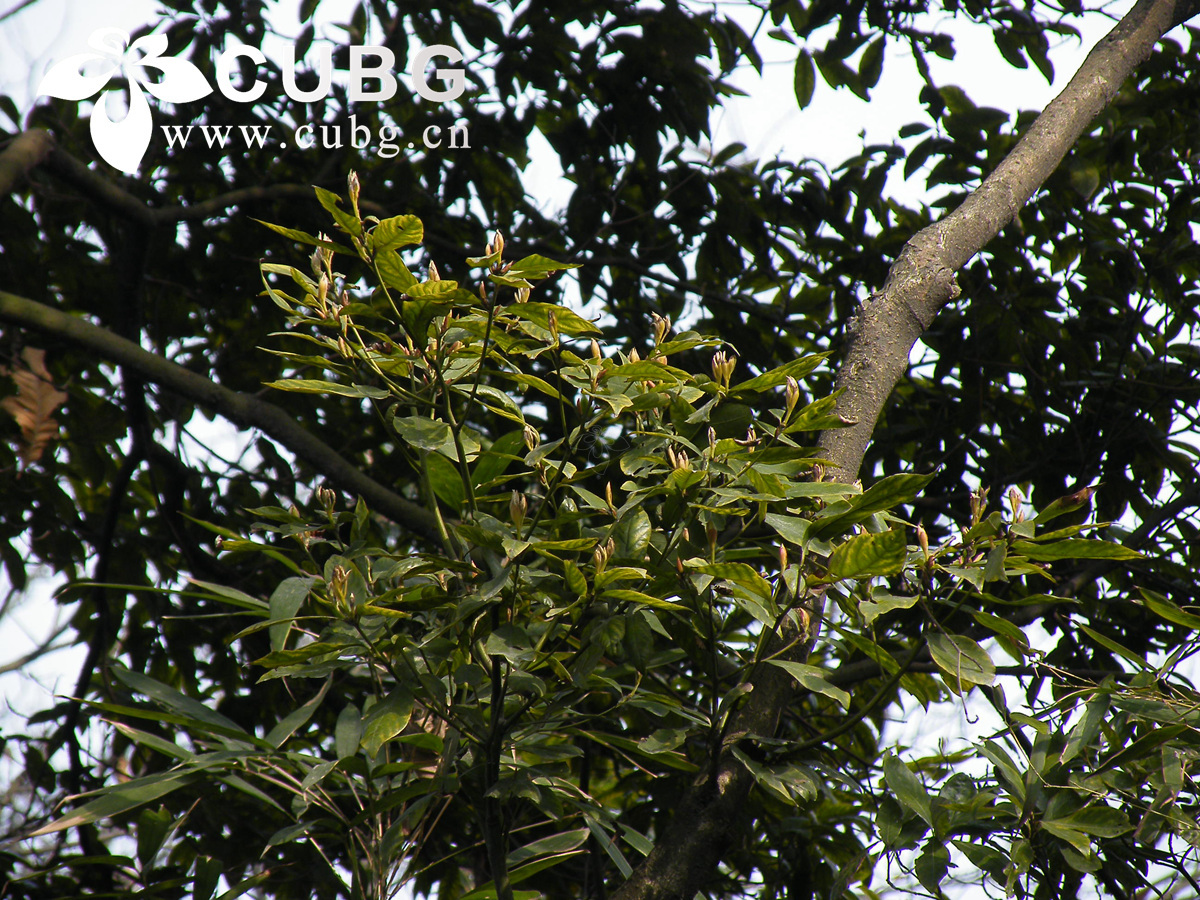
Phoebe zhennan (Image by ZHU Renbin)
Contact
LI Lang Ph.D
Xishuangbanna Tropical Botanical Garden
E-mail: lilang@xtbg.ac.cn
First published: 15 December 2025


