The Brown Hornbill (Anorrhinus austeni), a near-threatened species, is one of the most important large-bodied frugivores in the Indo-Burma biodiversity hotspot. However, t breeding had not been previously documented with site-attributed nests in China.
In a study published in Integrative Conservation, researchers from Xishuangbanna Tropical Botanical Garden (XTBG) have documented the first confirmed breeding of the near-threatened Brown Hornbill within China. The discovery of two active nests in the Shangyong Protected Area, Xishuangbanna, southern Yunnan, confirms the presence of a resident breeding population at the northernmost edge of the species' global range.
In April and May 2025, they documented two active nests in the Mengman sector of the Shangyong Protected Area, separated by ~3.5 km. The findings resolved long-standing uncertainty over whether these elusive birds were merely seasonal visitors from neighboring Laos. Both observed nests exhibited the species' distinctive cooperative breeding behavior, with sealed females being provisioned by multiple attending males.
The nests, located approximately 3.5 km apart in the Mengman sector, underscore the hornbills' reliance on large, cavity-bearing canopy trees within mature tropical seasonal evergreen forest. Their diet diversity indicates a dependence on a variety of fruiting tree species for successful reproduction.
"This finding transforms our understanding of the Brown Hornbill's status in China from a suspected visitor to a confirmed resident breeder. The observed cooperative breeding system persisting at this northern frontier is particularly notable," said LUO Kang of XTBG.
Hornbills are widely recognized as keystone frugivores whose persistence signals forest integrity. By verifying that one of Asia's most disturbance-sensitive frugivores still reproduces in China, these records highlight both the ecological integrity that Shangyong retains and the national and transboundary responsibilities to secure this integrity through coordinated action at the guild level.
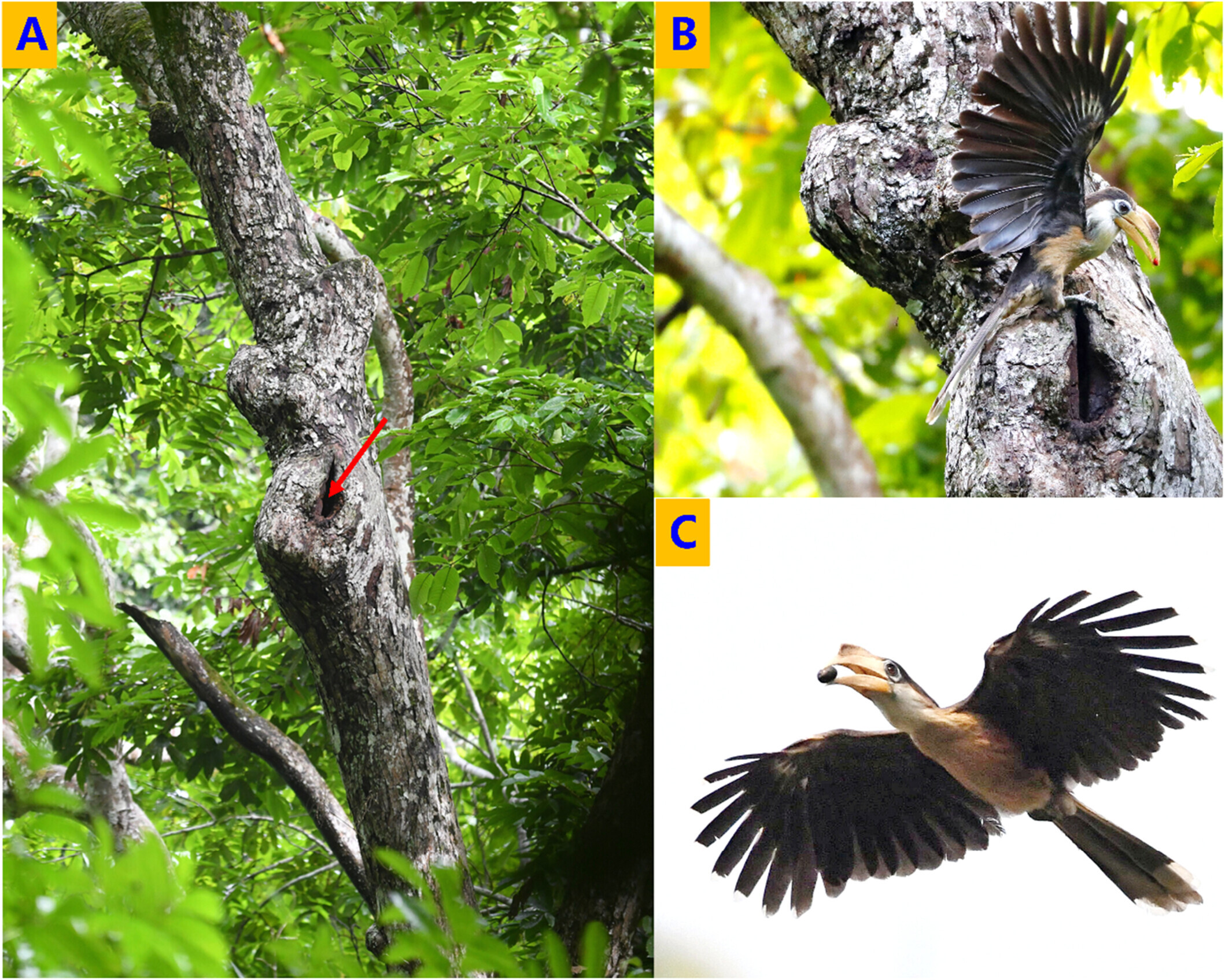
The second Brown Hornbill (Anorrhinus austeni) nest in the Shangyong Protected Area.
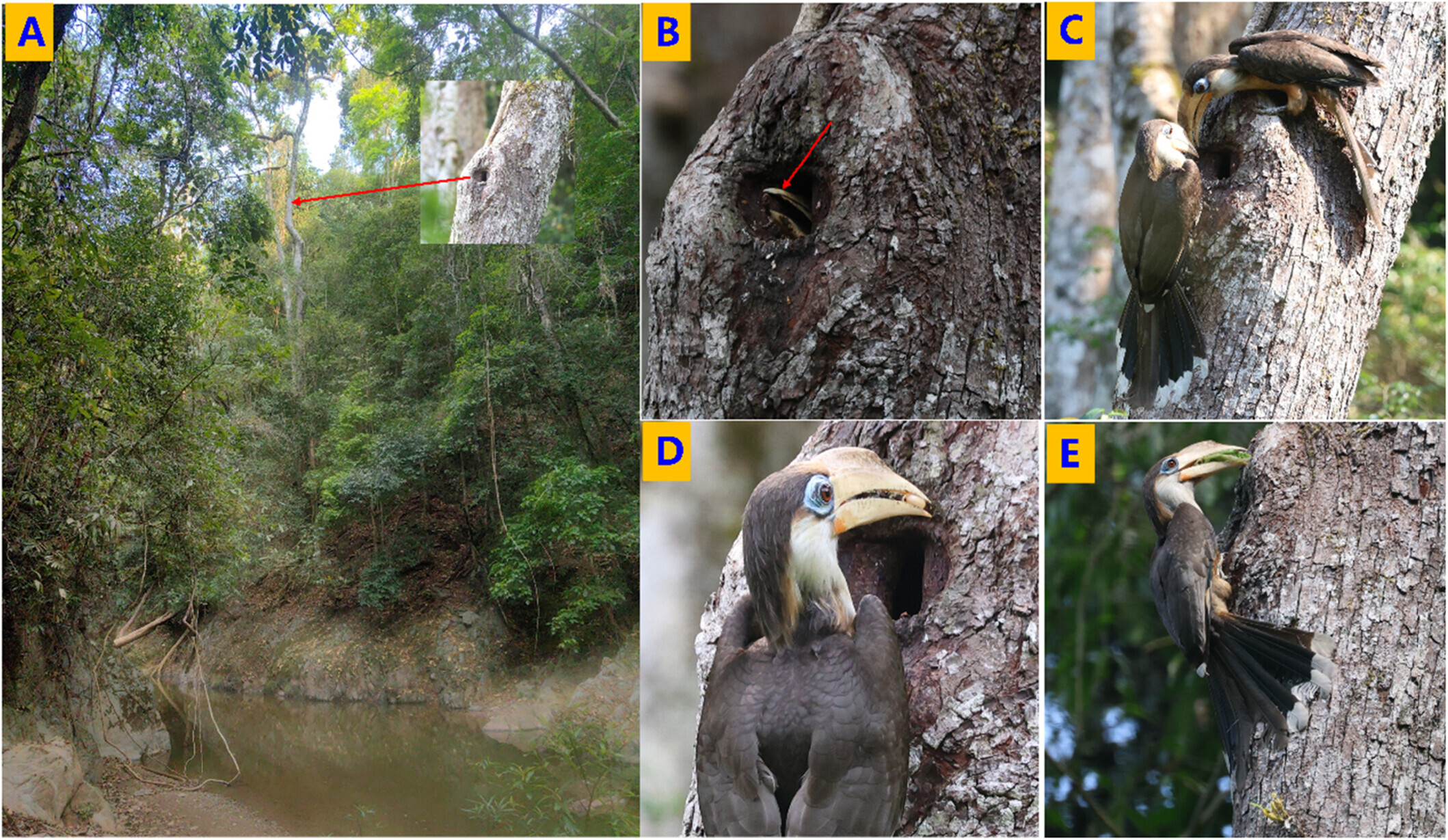
The first Brown Hornbill (Anorrhinus austeni) nest in the Shangyong Protected Area.
Contact
LUO Kang Ph.D
Xishuangbanna Tropical Botanical Garden
E-mail: luokang@xtbg.ac.cn
First published: 14 January 2026


