The genus Aristolochia, commonly known as pipevines, is the largest in the family Aristolochiaceae, with over 560 accepted species worldwide. The subgenus Siphisia is particularly diverse in East Asia. More than 80 taxa are found in China. While 16 species of Aristolochia have been recorded in Myanmar, eight belong to subgenus Siphisia.
During extensive botanical surveys in China and Myanmar, researchers from Xishuangbanna Tropical Botanical Garden (XTBG) of the Chinese Academy of Sciences discovered some unidentified species of Aristolochia subgenus Siphisia. After careful morphological studies, they confirmed that these represented three new species, two from China and one from Myanmar.
The three new species are all woody, perennial climbing lianas with zygomorphic, geniculately curved flowers and palmately veined leaves. They are named Aristolochia palatifera, Aristolochia menghaiensis, Aristolochia natmataungensis respectively, and have been published in Annales Botanici Fennici.
Aristolochia palatifera is named for its uniquely thickened calyx throat that forms a protruding tubular structure. This species was found in Longling and Mangshi, southwestern Yunnan, China. It grows in valley evergreen broad-leaf forests at approximately 2,000 meters above sea level. Morphologically, it resembles Aristolochia pseudoutriformis but differs in leaf size, flower structure, and limb characteristics.
Aristolochia menghaiensis was discovered on Huazhuliangzi Mountain in Menghai County, Yunnan. This species is distinguished by densely pubescent leaves and a cylindrical limb with deep lobes. It flowers from May to June and produces ellipsoid capsules. The species is named after its type locality, Menghai County.
Aristolochia natmataungensis was found in Natma Taung National Park (Mount Victoria), Chin State, Myanmar. This species grows in montane wet evergreen forests at elevations of 2,400–2,500 meters. It is named after the national park and is closely related to Aristolochia cucurbitoides but differs from the latter in leaf indumentum, bracteole size, and limb morphology.
Currently, the three species are known only from their respective type localities. According to the researchers, more botanical explorations are need to fully understand their distribution, population size, and local abundance, so as to assess their conservation status.
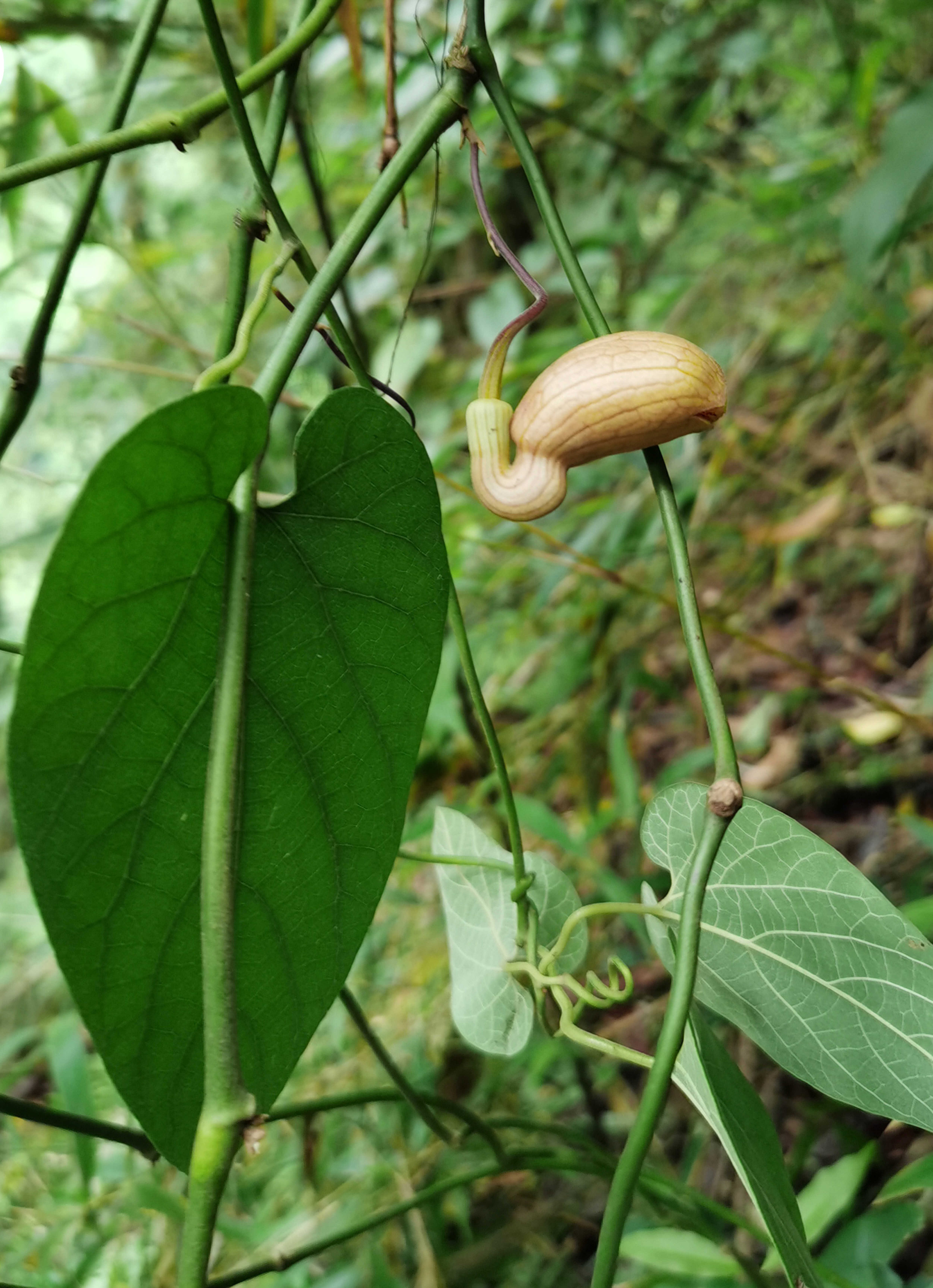
Aristolochia palatifera (Image by TAN Yunhong)

Aristolochia menghaiensis (Image by TAN Yunhong)
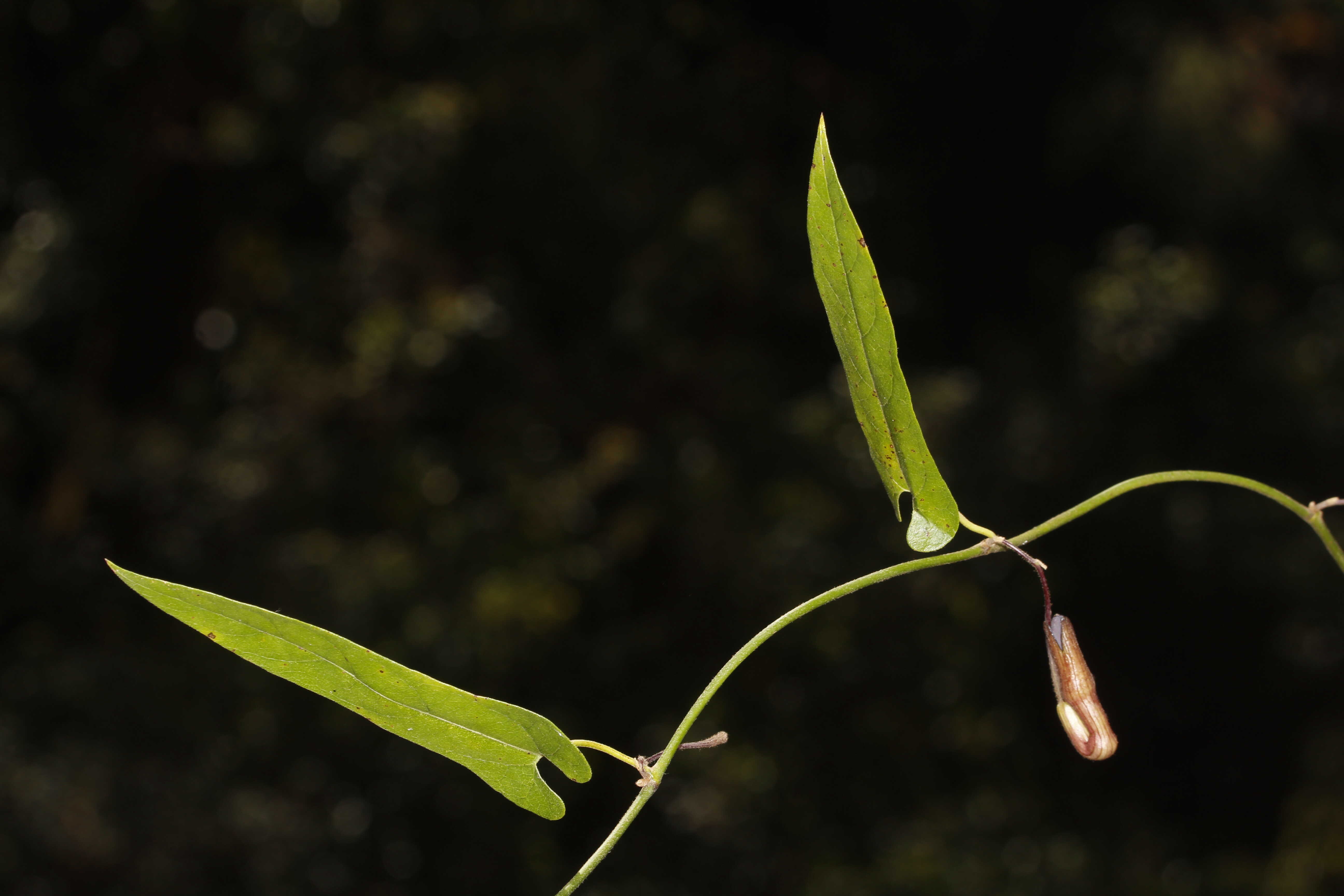
Aristolochia natmataungensis (Image by TAN Yunhong)
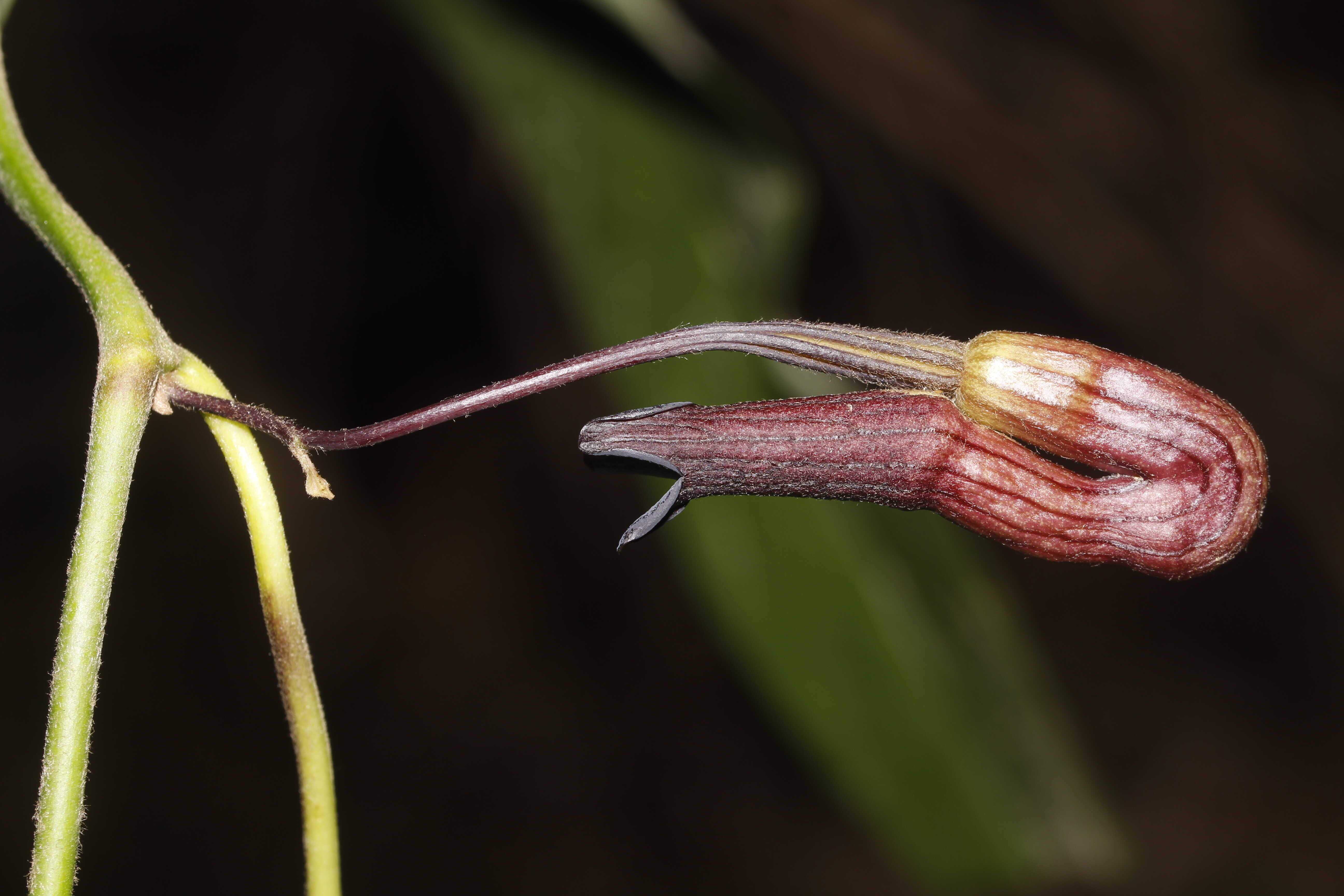
Aristolochia natmataungensis (Image by TAN Yunhong)
Published: 19 May 2026


