Join us for the 62ⁿᵈ Annual Meeting of the Association for Tropical Biology and Conservation (ATBC), taking place in Xishuangbanna, Yunnan, China, from June 28ᵗʰ - July 3ʳᵈ, 2026! Guided by the theme “Achieving a Shared Ecological Civilization for Long-Term Resilience”, ATBC2026 will bring together scientists, students, conservation professionals, policymakers, and local communities from across the globe. Together, we will explore advances in tropical biology and conservation, exchange innovative ideas, and highlight the essential role of the tropics in shaping our collective future. Be part of this inspiring gathering in Xishuangbanna — where rich biodiversity, cultural heritage, and international collaboration meet!
Keynote Speakers
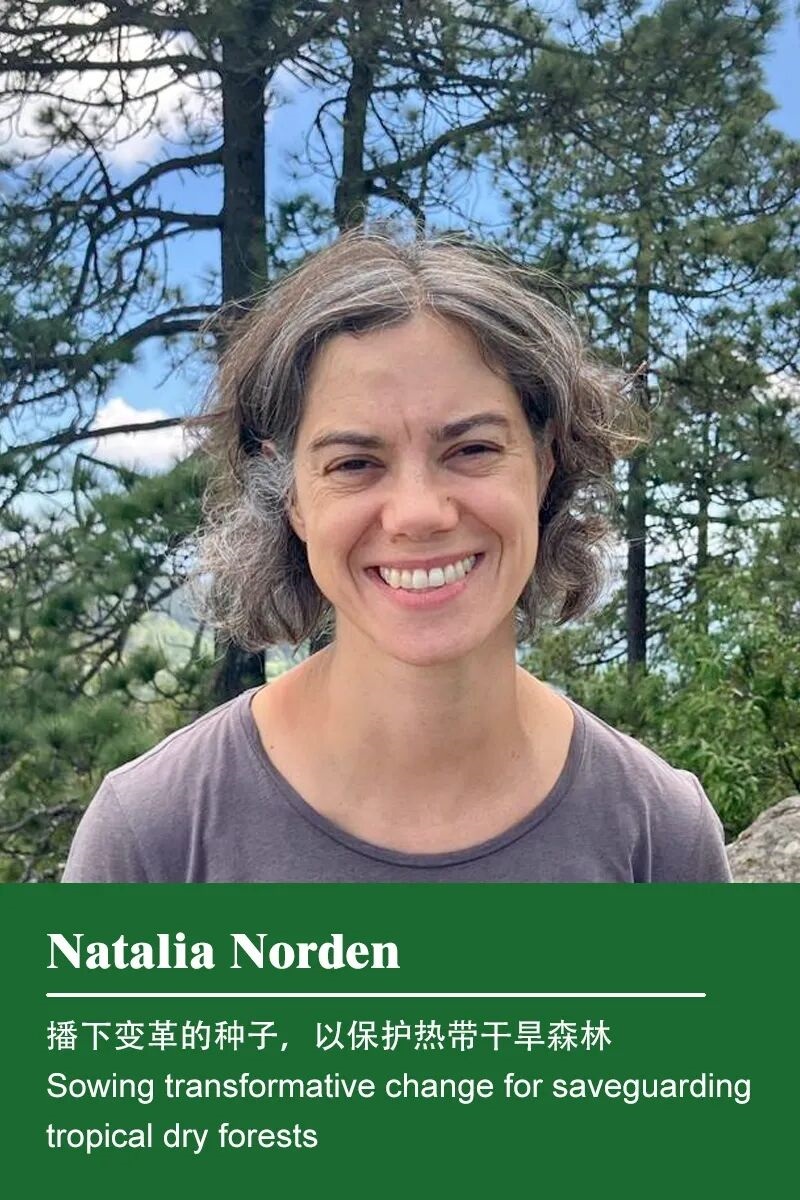
Biodiversity loss continues to accelerate despite growing scientific knowledge and the surge of multilateral initiatives such as the Kunming-Montreal Global Biodiversity Framework. This paradox reveals the widening gap between research and on-the-ground conservation. Here, I trace a personal scientific journey from question-driven ecology toward problem-driven conservation, using tropical dry forests (TDF) in Colombia as a case study in one of the most threatened ecosystems on Earth. Despite harboring exceptional biodiversity and supporting millions of people, these ecosystems are characterized by high levels of poverty, food insecurity and desertification. Consequently, tailoring restoration actions that also address food sovereignty is both urgent and critical.First, I reflect on the key challenges we have encountered in translating ecological knowledge into restoration practice in TDFs. While researchers have made substantial progress in understanding successional dynamics, critical bottlenecks along the restoration pipeline remain unresolved. Among the most persistent ones, we need to expand beyond the narrow set of commonly used plants by identifying and propagating suitable species for the drylands. However, no matter how well we resolve the ecological bottlenecks, nursery practitioners remain a forgotten link in the restoration chain. Restoration will only succeed and scale-up when researchers, practitioners, and local communities jointly shape the process from the start.Such collective action becomes even more urgent when we consider that food systems embedded in TDF landscapes are under mounting pressure from agrobiodiversity loss. I then discuss how transformative change— that is, fundamental, system-wide shifts in how we think, organize, and act —requires going beyond ecological knowledge to genuinely engage people. Drawing on work in Montes de María, a subregion of the Colombian Caribbean marked by violence and armed conflict, I present the concept of “culinary ecosystems” an integrative framework connecting agrobiodiversity, food practices, biocultural heritage, and local livelihoods. I show that higher biodiversity associated with cassava cultivation in local farms is tightly linked to richer diets, and reflects communities actively maintaining and adapting their food systems through memory, biodiversity management, and collective practices. Overall, these bottom-up initiatives illustrate that transformative change for biodiversity conservation cannot be purely academic. Transdisciplinary work is critical, as the most durable solutions emerge when people see themselves as protagonists of the socioecological restoration of their own territories.

Revolutionary methods are clearly necessary if we are to safeguard Nature’s adaptive capacity as we descend into a global biodiversity bottleneck. Until we emerge from this bottleneck, we must navigate an unprecedented, unpredictable world where core ecological evolutionary processes no longer function and novel environmental conditions are emerging locally and globally. The situation demands conservation research and applications that are not reliant on a dramatic improvement in behavior. Applied approaches must leverage available resources and capacity, given the reality of local circumstances, to bring together a community of actors who each play a role in enabling biodiversity’s natural coping mechanisms.Fortunately, astonishing breakthroughs and synergies are enabling revolutionary, impactful techniques and uncovering surprising natural resilience. These advances are not all robots, drones, and genomics but the rejuvenation of ancient practices including horticulture, agroforestry, and empowered tenured local stewardship. Grounded in proven management tools and case studies, I discuss strategies to integrate these methods into conservation action that helps prepare for the biodiversity bottleneck and sustain Nature's adaptive capacity. This requires clear-eyed collaboration across academic domains, government agencies, corporations, local communities, and tech sectors. I conclude with a call for the ATBC community to embrace revolutionary, inclusive, collaborative approaches, ensuring tropical conservation is adaptive, equitable, and resilient in the Anthropocene.

Long-standing geographic and taxonomic biases in ecology have significantly impaired our understanding of global biodiversity patterns. Seed ecology research remains heavily skewed toward the Global North, leaving the hyper-diverse tropical regions underrepresented. This imbalance is not merely a data gap; it is a fundamental bias that distorts our knowledge of ecological processes and evolutionary strategies.I will first examine these biases through the lens of biotic interactions, specifically seed predation and defence. The classic hypothesis suggests that both predation pressure and plant defences intensify at lower latitudes. However, I will present evidence from multiple large-scale experiments, spanning the Australian east coast and extensive forest networks across China, that challenge these assumptions. Our findings, encompassing both interspecific comparisons and intraspecific studies of Chinese cork oak populations, demonstrate that physical investment in seed protection does not consistently increase towards the tropics. In many instances, seed predation is actually higher at high latitudes, and tropical seeds are not necessarily better defended than their temperate counterparts. These results are further supported by our recent global-scale empirical research and data syntheses on seed physical defences, suggesting that current paradigms may oversimplify the complex drivers of plant-animal interactions.Beyond biotic interactions, I will discuss the broader implications of these biases for seed functional traits. To move toward a more inclusive global seed ecology, we have developed initiatives such as the Chinese Seed Trait Database, Tropical Seed Trait Database and the TEA-Traits database for Tropical East Africa. By integrating regional datasets, herbarium records, and AI-enhanced trait extraction, we can bridge the tropical gaps in functional trait research. Ultimately, I argue that synthesising cross-continental empirical data with comprehensive trait databases is essential for establishing a representative seed ecology that reflects the diversity and evolutionary history of the world's flora.
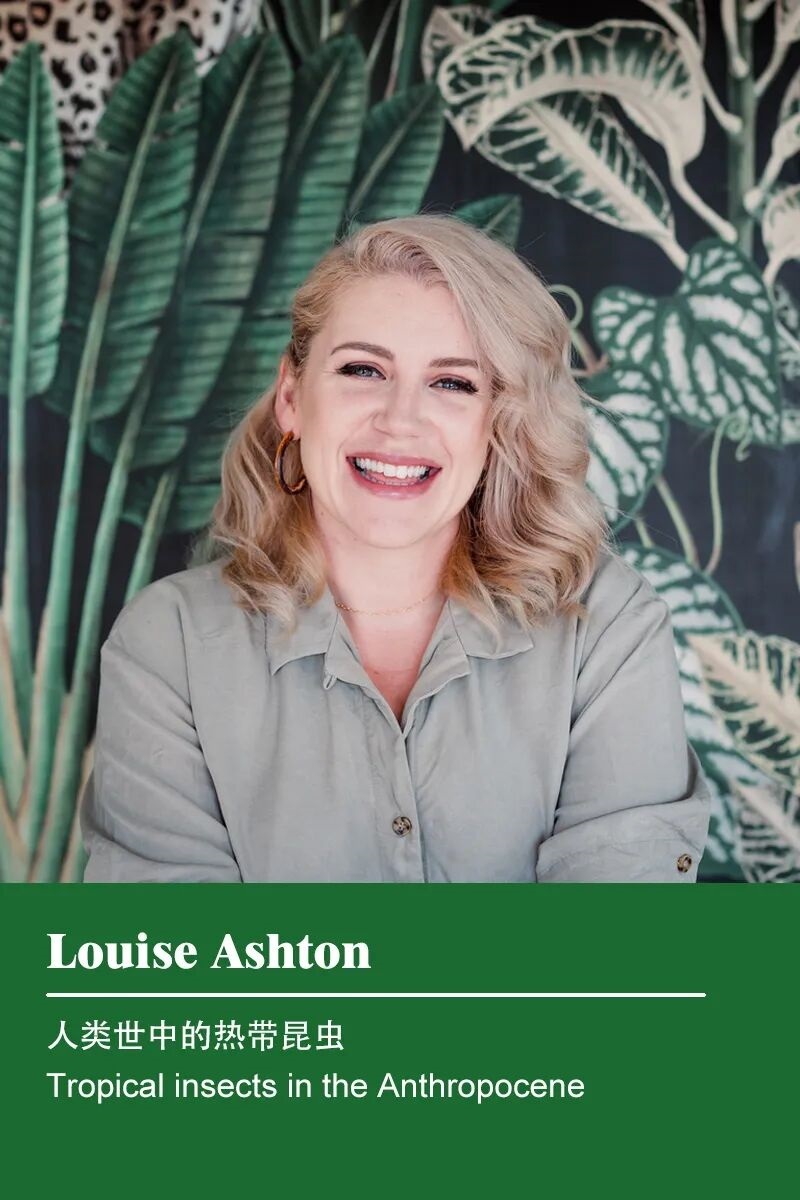
Tropical forests have the highest productivity and biodiversity of any terrestrial system. Insects make up a large proportion of that diversity and carry out essential ecological processes such as pollination and nutrient cycling. In our work at the Biodiversity and Environmental Change lab at the University of Hong Kong, we have applied a range of tools including experimental manipulations, stable isotope analysis and long-term resampling efforts to better understand the functional roles of tropical rainforest insects, as well as how they are responding to a range of compounding anthropogenic stressors, including deforestation and climate change.
Tropical soil fauna, such as termites and earthworms are essential for soil function, shaping nutrient availably and productivity through their decomposition and soil bioturbation processes, however a temperate bias in our understanding means they are often seen as only facilitators of microbial decomposition. We developed novel mesocosm methods to quantify decomposition carried out by soil fauna and microbes and the consequences for plant nutrient uptake. We found that in the presence of soil fauna, plant 15N uptake is 60% higher, with major differences in nutrient pathways for disturbed, primary, tropical and temperate forests. These results highlight the essential roles of insects in ecosystem function and resilience, however, the ways in which insects and their processes are shifting in response to global change remain poorly understood.
Reports of insect declines have been widely reported, with most evidence from heavily modified temperate landscapes. Some reports are emerging that tropical insects are also in decline, even in habitats that are not undergoing habitat transformation. However, due to a lack of long-term monitoring data of insects in tropical regions, we have a very poor understanding of how insects are changing through time. We have been locating and assessing pan-tropical data sets while continuing to re-sample insect diversity across pristine tropical Asian and Australian rainforests to disentangle the effects of climate change from other drivers. Analysis of existing data show that five major invertebrate groups – spiders, termites and cockroaches, beetles, true bugs, moths and butterflies, appear to be in long-term El Niño-associated declines, with correlated changes to herbivory and decomposition processes. Our own resampling efforts across an elevational gradient show moths, ants, dung beetles and plants are contracting towards mid-elevations, shaped by increasingly extreme microclimates. These results indicate that even in primary tropical forests, insects are in trouble, with wide-scale implications for the future of functioning of tropical ecosystems.

Most of us have been scenic parks where we have viewed wildlife or done research in Wildlife Sanctuaries. Historically wildlife have shared human use landscapes such as village lands or waterways used by humans. Reasons for them not being there now is likely to be human induced extirpation. India is what appears to be an anomaly in today’s world where with more than a billion people, it still is home to an extremely high diversity of wildlife. More than 50% of the global elephant and tiger populations live in India. It is the only home to the Asiatic lion population in the world where half the lions live outside the Protected Areas in people’s lands. Our laws do not allow for easily culling or hunting and even if a tiger has killed a human being it is not very easy to kill the animal unless you can prove it is the individual that killed.
The geographic borders of wildlife reserves are what we humans create for human administrative use which do not apply to animals. Again we apply an idea of what we think human wildlife relationships should be but we find that rural people and wild animals have had ancient relationships based on fear, awe, reverence and appeasement which might be reasons why the relationship is one of negotiation between people and wildlife rather than only interventions that we biologists understand. Large cats are revered by multiple communities in India, even today. Could it be these relationships that still allow for persistence of potentially dangerous wildlife in human use landscapes in India?
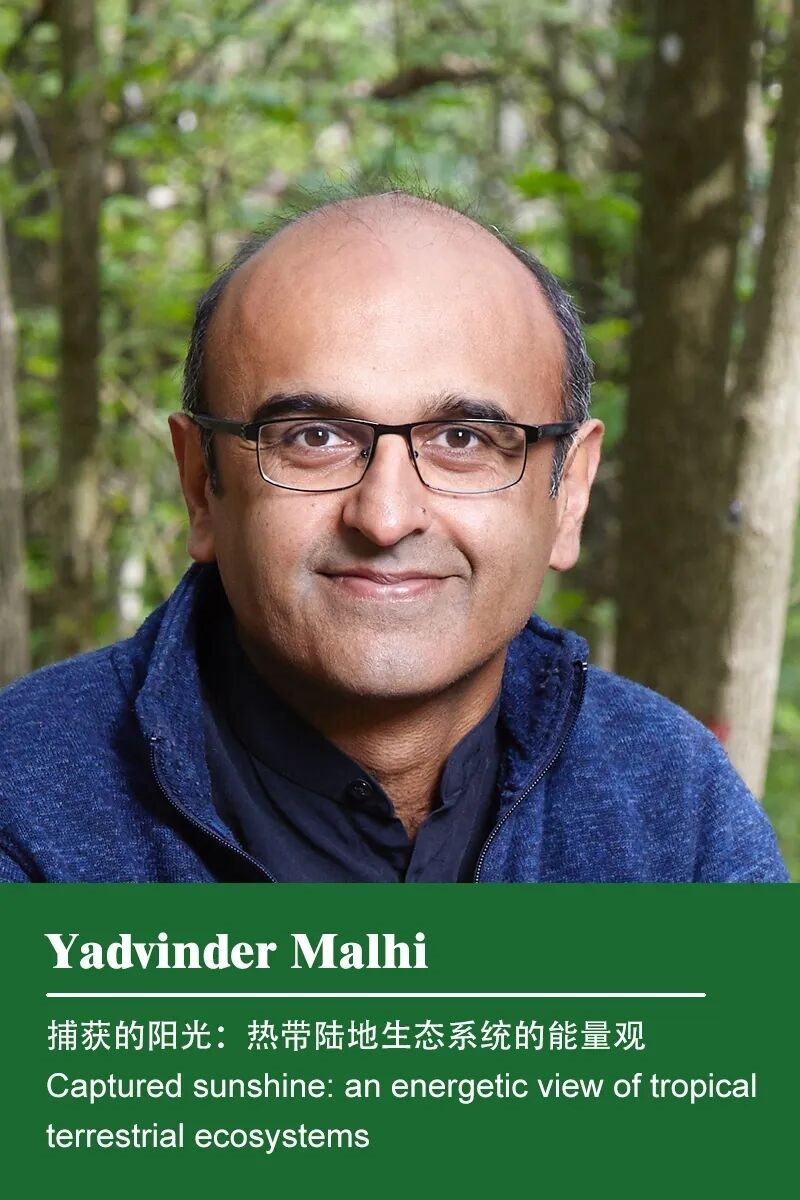
The biosphere was first described as “a planetary membrane for capturing, storing and transforming solar energy” by Vernadsky in the early 20th century. Every living organism is united, and can be compared, by the cascade of captured sunshine that powers it. But beyond powerful imagery, can an energetic approach to ecosystems yield a practical contribution to understanding how increasing human pressure is altering ecological function, and be a tool for assessing the effectiveness of nature recovery?
This talk explores this potential with a focus on plants, birds, and mammals, the best-documented taxonomic groups. I first describe field studies of tropical forest energetics in forests in Borneo and Amazonia, exploring the differences in plant and vertebrate energetics between the two ecosystems. I then explore the difference in energetics between old-growth and logged forests, examining how plant functional traits end up shaping vertebrate communities.
Finally, I explore how energetic approaches can be applied at scale, looking at the patterns and changes in bird and mammal communities across sub-Saharan Africa.
I conclude by proposing a novel ecological metric, vibrancy, that captures the magnitude and spread of energy flow through any specific taxonomic or functional group. I explore its potential, as well as limitations. I call for a revival of interest in energetics approaches as a tool to understand tropical ecosystems on a changing planet. An energetic approach to understanding life on Earth can yield some surprising and provocative insights into our changing biosphere.


