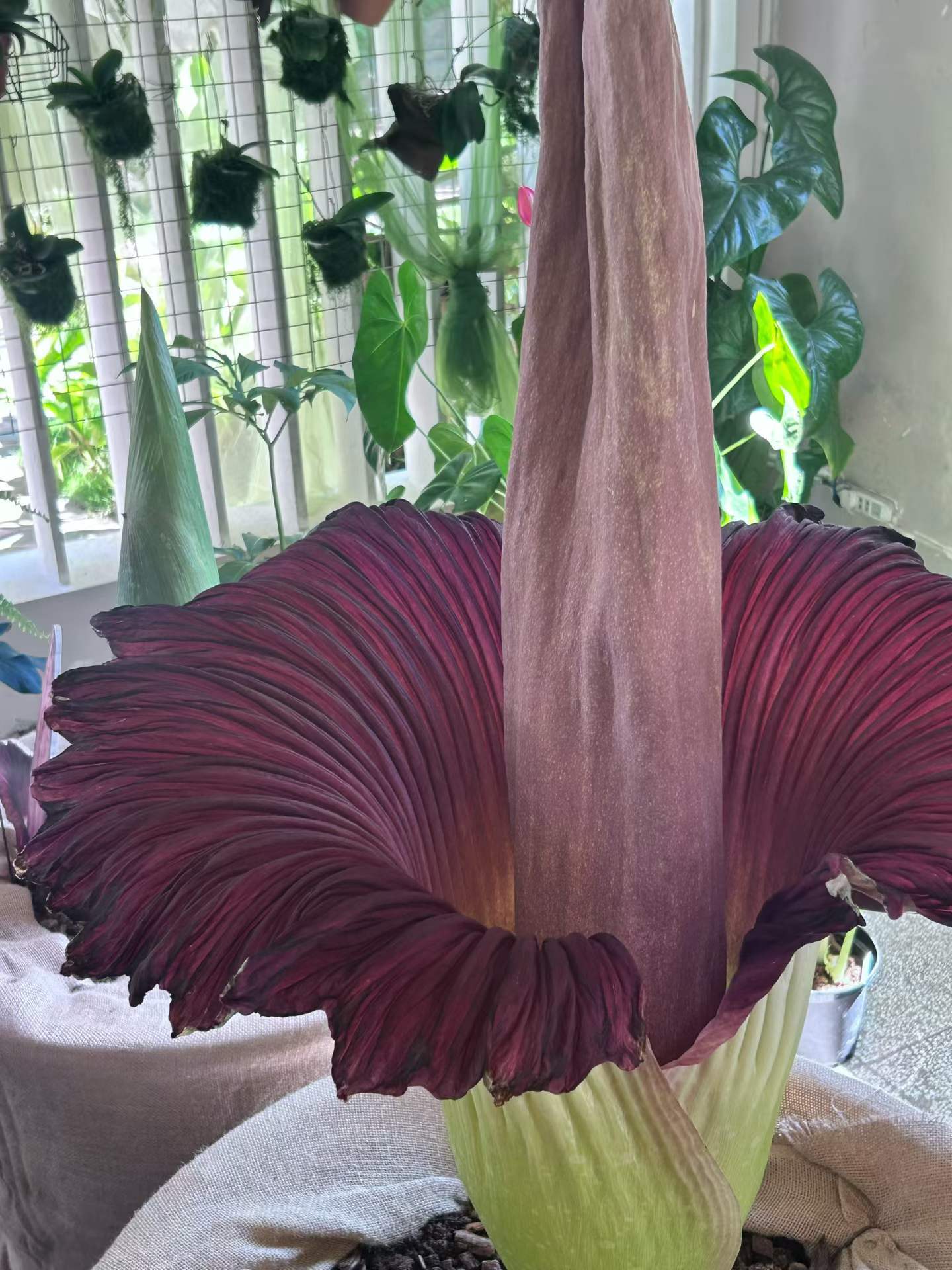
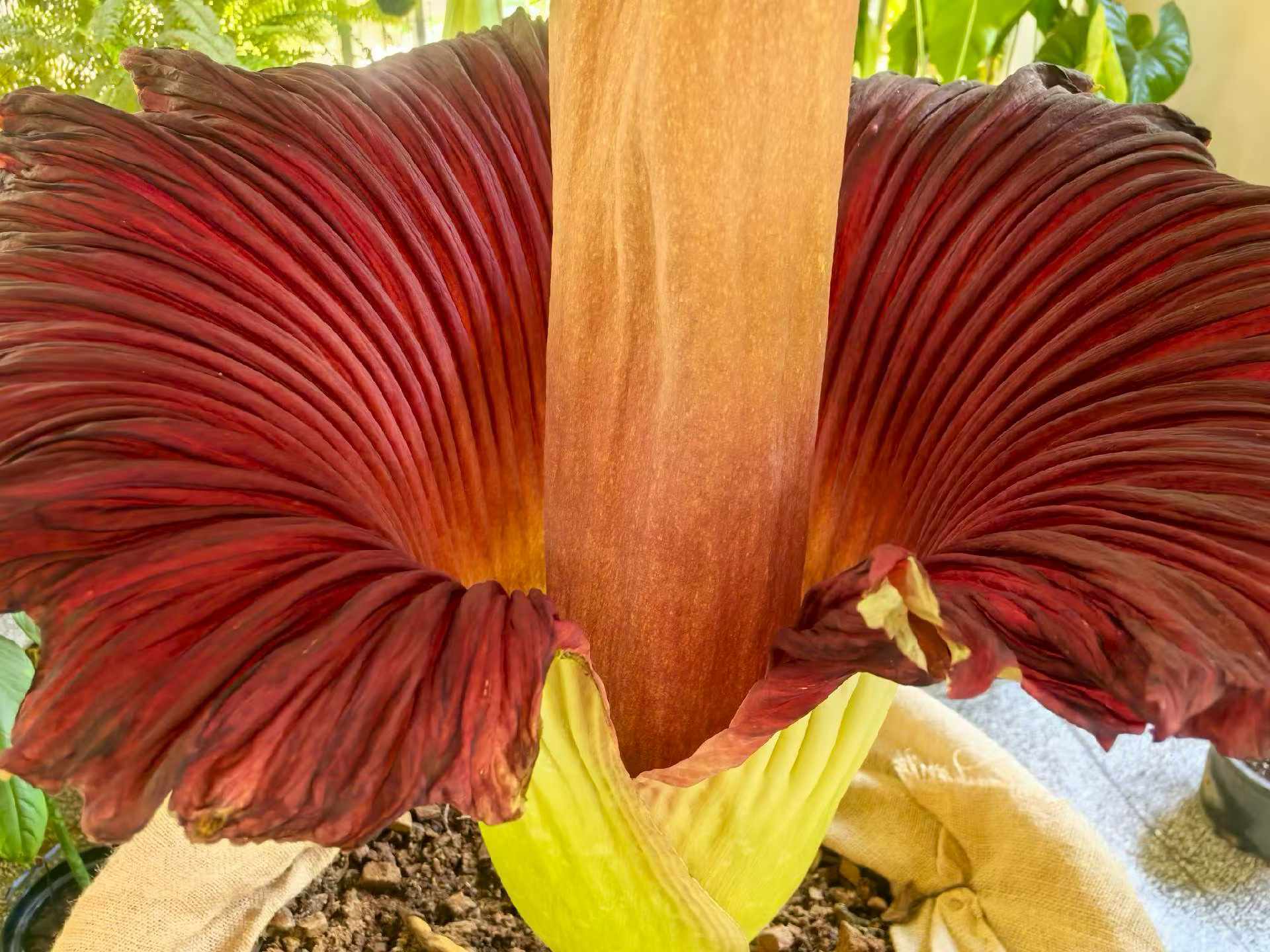
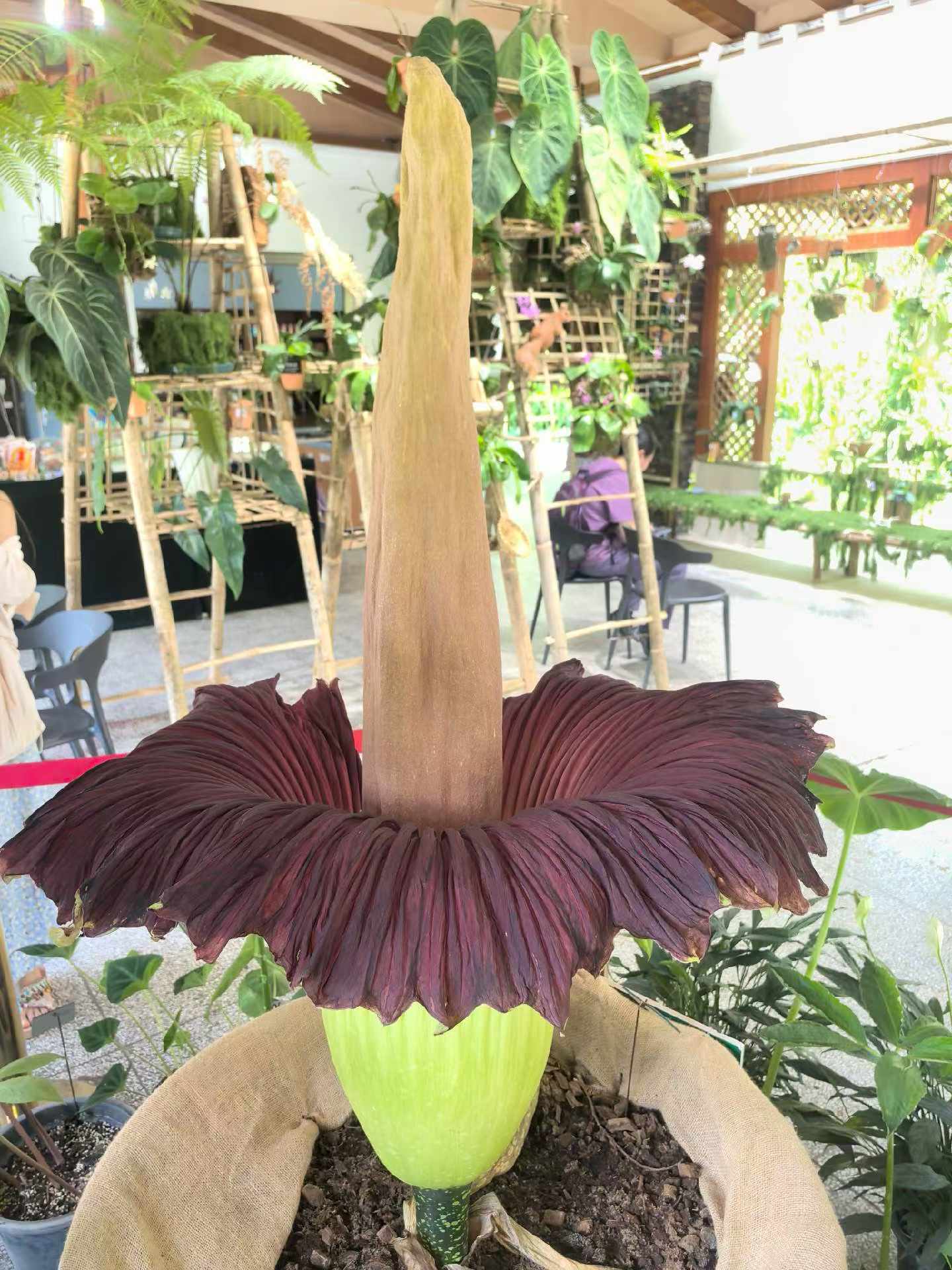
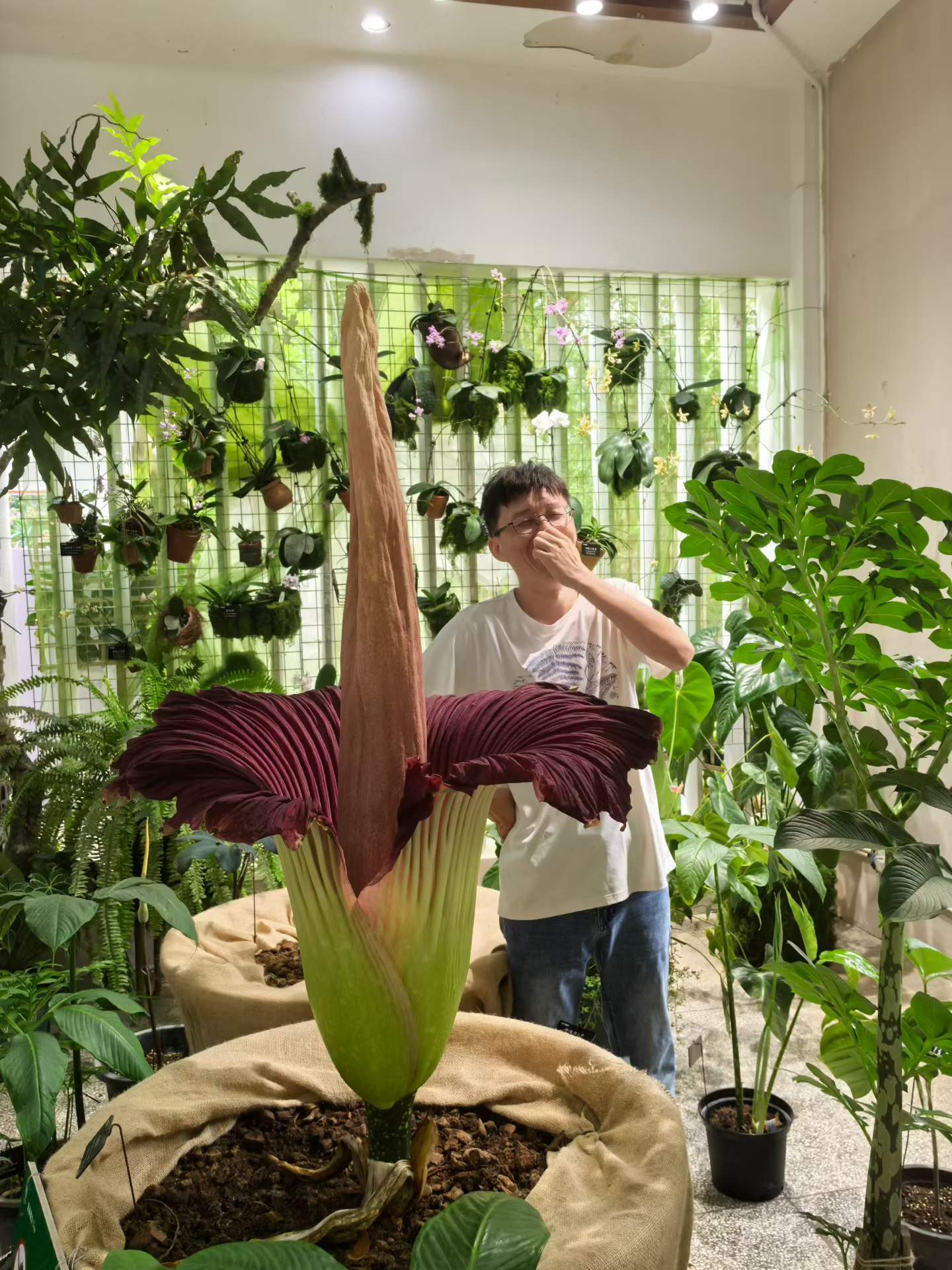
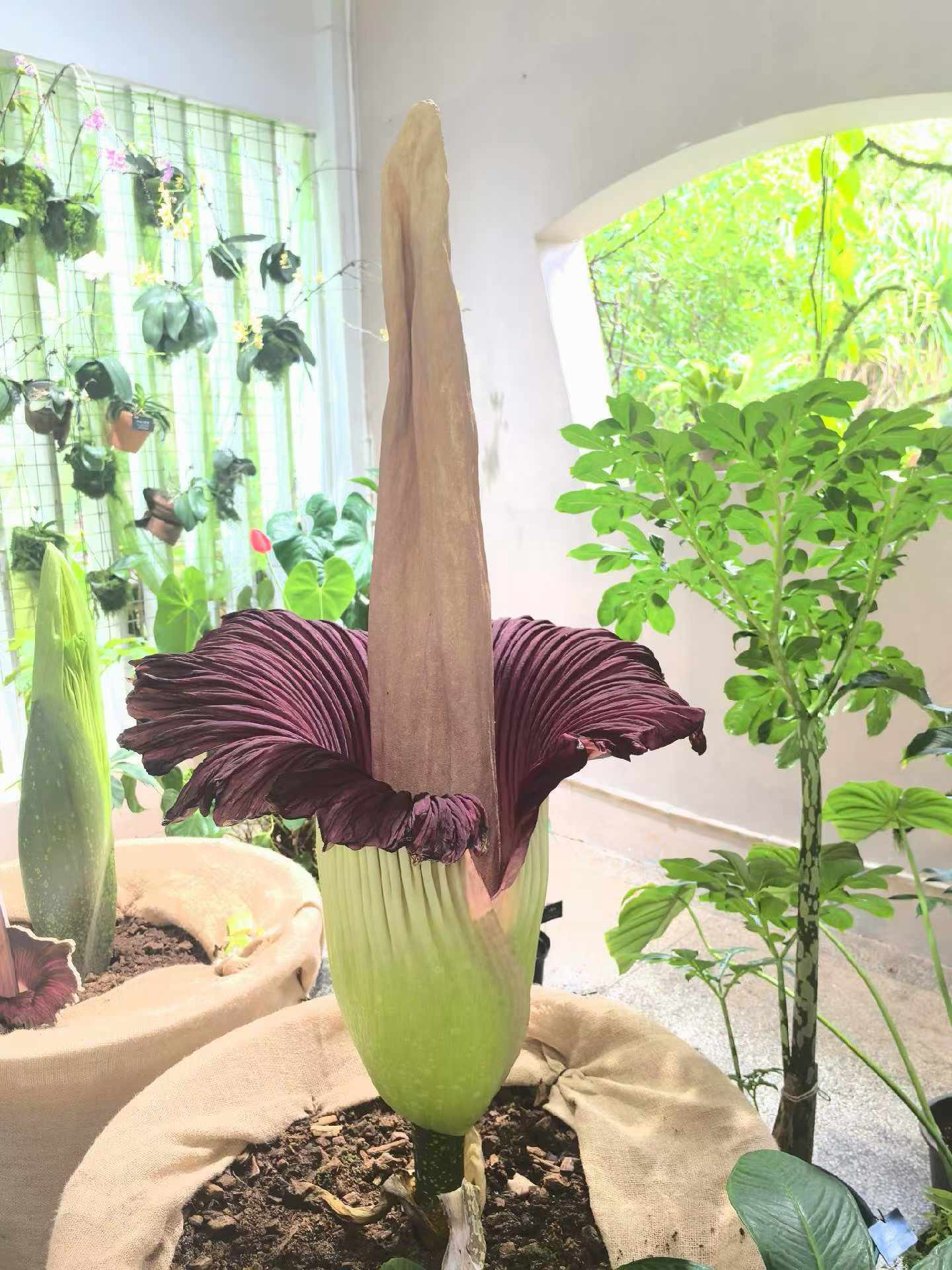
A newly introduced Amorphophallus titanum, better known as the giant corpse flower, has burst into bloom at Xishuangbanna Tropical Botanical Garden (XTBG)on June 1. This marks the third time the garden has exhibited a flowering titan arum to the public, following previous blooms in 2017 and 2022.
The blooming of a titan arum, or corpse plant, is a spectacle like none other in the plant world. It attracted large crowds of tourists and nature enthusiasts to see the giant corpse flower with their noses stuffed, because it has an incredibly foul smell of rotten flesh when in bloom.
To celebrate the rare case, three live online broadcasts with commentary were held, drawing a total of 20,000 views.
Native to the rainforests of Sumatra, Indonesia, the titan arum produces the largest unbranched inflorescence (many tiny flowers acting as one) on Earth, capable of reaching up to three meters in height.
The corpse flower does not have an annual blooming cycle. It requires at least five years of vegetative growth to store enough energy in its massive corm before it can bloom. It requires very special conditions, including warm day and night temperatures and high humidity, making botanic gardens well suited to support this strange plant outside of its natural range. Once the process begins, the inflorescence can surge upward at a rate of nearly 10 centimeters per day and only blooms for just 2 days.
When fully open, the flower emits a powerful stench of rotting flesh or decaying fish, along with generating heat through biochemical reactions. The heat helps disperse the odor and mimics the body temperature of a freshly dead animal, attracting carrion-feeding pollinating insects.
The corpse flower (Amorphophallus titanum) is listed as Endangered by the International Union for Conservation of Nature (IUCN), with an estimation of fewer than 1,000 individuals remaining in the wild. IUCN estimates the population has declined more than 50% over the past 150 years. The main reasons for the decline are logging and the conversion of the plant’s native forest habitat to oil palm plantations.
Many visitors said that it’s a pretty remarkable thing and “once in a lifetime” experience to see the corpse flower blooming.
“It’s not quite accurate. The corpse flower will likely bloom in a couple years also. And actually XTBG has many other corpse flowers. In a fortunate coincidence, another recently introduced titan arum corm has also produced a bud and is expected to bloom in about ten days. So, if you have to miss this bloom, just come and enjoy another blooming in 10days,” said Wu Fuchuan of XTBG.
For the two flowering individuals, researchers will collect and preserve their pollen at low temperatures for future pollination or cross�breeding efforts, contributing to the protection of this endangered species.