The 62nd Annual Meeting of the Association for Tropical Biology and Conservation (ATBC) closed in Xishuangbanna on July 2 with the release of Xishuangbanna Declaration, a landmark document calling for building partnerships for ecological resilience and long-term sustainability in tropical Asia.
The five-day conference, held under the theme “Achieving a Shared Ecological Civilization for Long-Term Resilience,” brought together more than 700 scientists, conservation practitioners, and young scholars from over 60 countries and regions. Hosted by Xishuangbanna Tropical Botanical Garden (XTBG) of the Chinese Academy of Sciences, the meeting marked ATBC’s return to China two decades after the association first convened in the country and issued the landmark 2006 Kunming Declaration.
The Xishuangbanna Declaration reviews two decades of progress while confronting persistent and emerging threats to the region’s biodiversity. Protected area coverage across tropical Asia has grown by approximately 60 percent over the past 20 years, and scientific capacity has expanded considerably through cross-border institutions such as the Southeast Asia Biodiversity Research Institute of the Chinese Academy of Sciences (SEABRI, CAS), which has supported biodiversity research, ranger training, and regional scientist development for over a decade.
Xishuangbanna, situated at the convergence of tropical and subtropical zones and bordering Myanmar, Laos, and Vietnam, maintains forest cover at 74 percent and hosts one-fifth of China’s plant diversity and one-quarter of its animal diversity despite representing only one-five-hundredth of the country’s mainland area. The China-Laos joint protected area has expanded from 200,000 to 333,000 hectares since 2012.
However, the declaration warns that many threats identified in 2006, including agricultural expansion, logging, and illegal wildlife trade, continue to drive forest degradation and species declines. Climate change, emerging pollutants, and escalating human-wildlife conflict pose new pressures on ecosystems and ecosystem services across the region
These challenges highlight the interdependence of ecosystems, species, and human health, urging strategic and collaborative responses.
To address these challenges, the declaration puts forward strategic approach. It proposes building partnerships for ecological resilience and long-term sustainability. To support these efforts, it is essential to strengthen platforms for regional monitoring, scientific collaboration, and knowledge exchange, including mechanisms to share data, methods, experiences, and scientific expertise, while enabling adaptive management informed by both traditional ecological knowledge and modern technologies.
These initiatives, collectively, can strengthen regional cooperation, expand scientific understanding, and enhance the long-term resilience of tropical ecosystems.
The Xishuangbanna Declaration offers strategic recommendations including: expand protected areas; develop protected area networks and cross-border ecological corridors;formalize transboundary conservation agreements and joint management frameworks; increase financial and institutional support; set up a tropical Asia biodiversity monitoring network; develop an open-access regional knowledge hub; prioritize research on emerging threats; deepen ongoing dialogue among policymakers, scientists, local communities, and regional organizations; minimize habitat fragmentation and safeguard ecological connectivity; integrate local community perspectives and traditional ecological knowledge into conservation planning; etc.
“The Xishuangbanna Declaration is not merely an academic document, it is a roadmap for collective action,” said XING Yaowu, director of XTBG, in his closing remarks. “It underscores our commitment to safeguarding tropical Asia’s natural heritage through science, cooperation, and inclusive action, guided by the vision of ecological civilization, harmony between humanity and nature.”
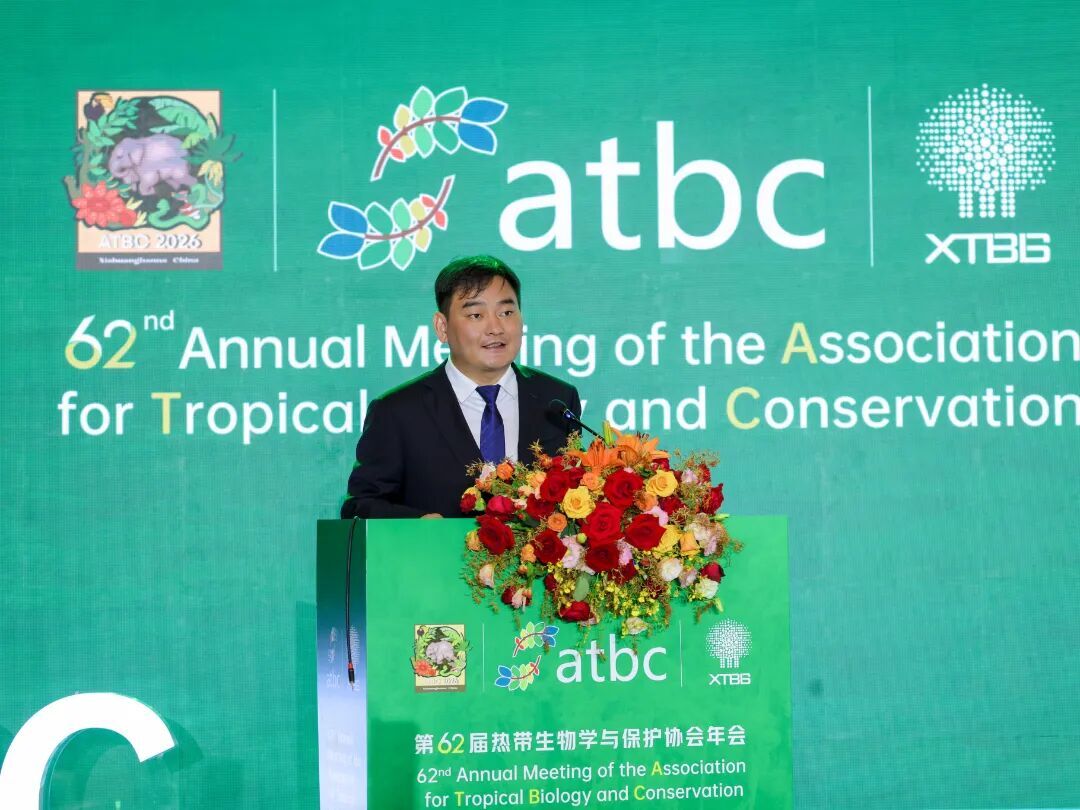
XING Yaowu sees Xishuangbanna Declaration as a roadmap for collective action.
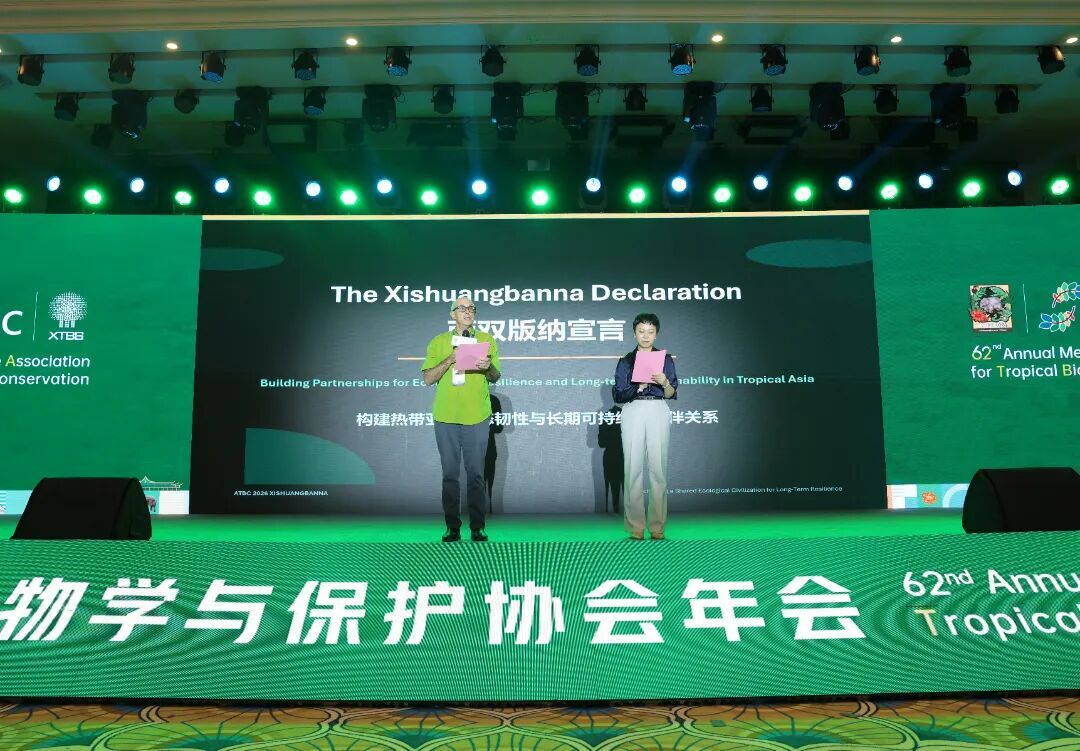
Xishuangbanna Declaration released.


