Large language models (LLMs) represent a major advancement in artificial intelligence (AI) and are increasingly being integrated into the workflows of researchers and practitioners, including those in ecology and conservation science. However, their growing application also raises concerns.
In a study published in Conservation Biology, researchers from Xishuangbanna Tropical Botanical Garden (XTBG) of the Chinese Academy of Sciences reveal that LLMs provide revolutionary tools for ecological research but require prudent implementation and regulatory management to maximize benefits while mitigating potential risks.
The researchers reviewed emerging applications of LLMs, drawing on the wider scientific literature and practical use cases. By synthesizing findings from peer-reviewed literature, preprints, and conference proceedings, they found that LLMs such as GPT-5, LLaMa 2, and DeepSeek-V2 are already being used to extract ecological information from unstructured sources, enable natural�language queries of structured databases, and perform large-scale literature syntheses.
Practical use cases include automated monitoring of news reports to generate ecological insights, integration with edge devices such as camera traps to enhance biodiversity monitoring, and assistance with analytical tasks. Custom models trained on domain-specific information are also being deployed to improve scientific communication and outreach. Other emerging applications extend to policy analysis and decision support, including simulating stakeholder interactions using multiagent systems.
These advanced artificial intelligence systems could dramatically streamline research workflows, enhance biodiversity monitoring, and accelerate evidence-based conservation. However, the researchers caution that technical and ethical challenges, including inaccuracies, biases, and environmental impacts,must be addressed to ensure equitable and effective adoption.
The researchers recommend a set of best practices: careful model selection, effective prompt engineering, retrieval-augmented generation to improve factual accuracy and representation, human-in-the-loop validation, and broader efforts to promote inclusive development, capacity building, and appropriate governance.
“When applied thoughtfully, large language models can serve as a valuable addition to the ecologists’ toolkit, enhancing scientific capacity and supporting efforts toward achieving global biodiversity goals,” said Christos Mammides of XTBG.
He added that training and support for researchers, especially those in underresourced settings, will be essential to ensure equitable access and meaningful participation in this technological shift.
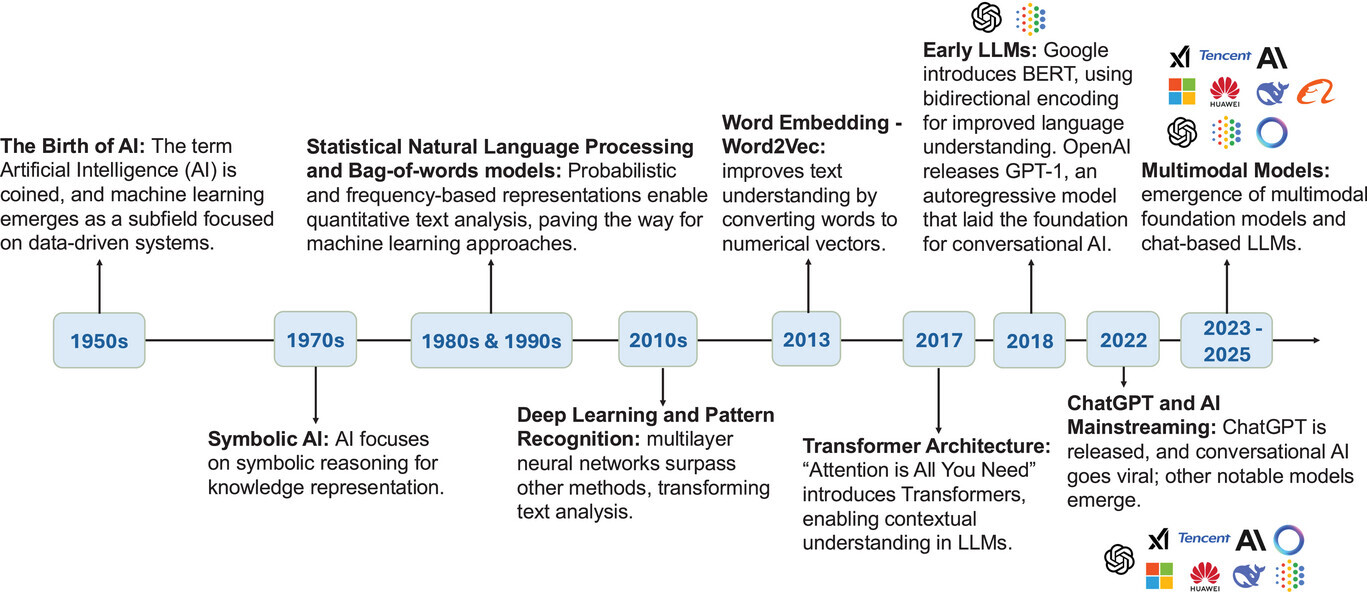
Timeline of major developments that led to the emergence and deployment of large language models. (Image by Christos Mammides)
First published: 13 April 2026


