As climate change brings more frequent and severe droughts, forests worldwide are suffering rising mortality rates. While biological interactions such as parasitism can influence how plants cope with water stress, the underlying mechanisms have remained poorly understood.
In a study published in New Phytologist, researchers from Xishuangbanna Tropical Botanical Garden (XTBG) of the Chinese Academy of Sciences found that parasitic mistletoes, although highly tolerant of drought-induced blockages in their own water-conducting tissues, are critically constrained by the hydraulic limits of their host trees. Because the two are so tightly linked, any increase in a host’s vulnerability to drought directly translates into greater risk for its mistletoes, potentially amplifying water stress and making whole forest communities more fragile.
Mistletoes are obligate stem hemiparasites: they lack true roots and depend entirely on their hosts for water and nutrients, though they perform photosynthesis themselves. To extract water from their hosts, they must maintain lower (more negative) leaf water potentials and sustain high transpiration rates.
To investigate how these parasites resist drought, the scientists analyzed xylem vulnerability curves, vessel and pit anatomy, water-use indicators, and phylogenetically informed models across 41 mistletoe-host species pairs in tropical China. They discovered that mistletoes are more resistant to xylem embolism (blockages caused by air bubbles) than their host trees. However, this greater safety comes at the cost of lower hydraulic efficiency, a trade�off consistent with their need to operate under constant high tension.
Interestingly, while embolism resistance in host trees was strongly linked to anatomical traits such as vessel size and pit membrane properties, these same relationships were weaker in mistletoes and only became apparent when species�level differences were taken into account.
They then found that the P50 of host trees (i.e. the water potential at which 50% of hydraulic conductivity is lost) exerted a direct, primary effect on mistletoe P50. Mistletoe anatomical traits played only a secondary role.
"Our results indicate that mistletoes operate within a shared mistletoe–host hydraulic continuum," said ZHANG Jiaolin of XTBG. "Rather than independently optimizing their hydraulic systems, mistletoes are constrained by the hydraulic vulnerability of their hosts. That means when hosts are under stress, mistletoes are inevitably pushed closer to their own breaking points."
This study provides the first broad-scale evidence that host hydraulics constrain parasite hydraulic safety across a wide range of species pairs.
“Explicitly accounting for mistletoe–host hydraulic coupling will be essential for improving assessments of forest drought vulnerability, predicting drought-induced tree mortality, and forecasting the future distribution and ecological impacts of parasitic plants in forest ecosystems under climate change,” added ZHANG Yunbing.
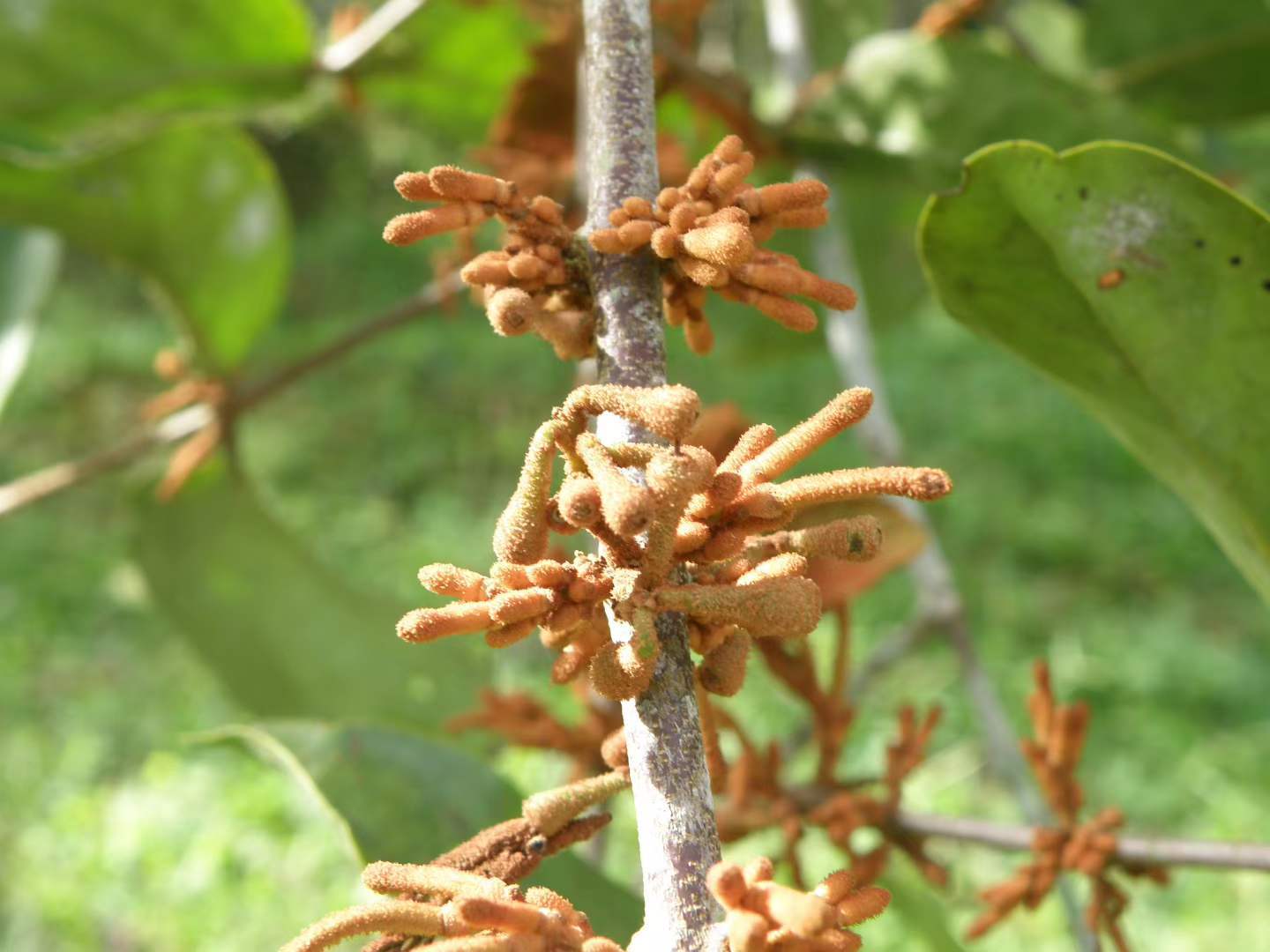
A kind of mistletoes. (Image by HUANG Xianyan)
First published: 09 July 2026


