For decades, the small tree Meiogyne monogyna was mistakenly lumped together with its widespread relative Meiogyne virgata, a species native to Southeast Asia and Malesia. However, through detailed examinations of herbarium specimens and field observations of living plants, researchers from Xishuangbanna Tropical Botanical Garden (XTBG) of the Chinese Academy of Sciences have reinstated Meiogyne monogyna as a distinct species and documented it for the first time as a new record for the flora of China.
The species was first described in 1942 as Desmos monogynus based on collections from Tonkin, Vietnam, and later transferred to the genus Meiogyne in 1974. Owing to superficial resemblances in flower and fruit morphology, it was subsequently relegated to a synonym of Meiogyne virgata. The latest study, published in Phytotaxa, overturns that long-standing classification with compelling morphological evidence.
Meiogyne monogyna is a small tree reaching up to six meters tall, with oblong to elliptic-oblong leaves, light greenish-yellow to cream-colored flowers, and cylindrical fruits containing reniform to flattened-ellipsoid seeds. It can be distinguished from its close relative Meiogyne virgata by having shorter petioles, longer outer and inner petals when dried, bilobed stigmas, cylindrical monocarps with a beaked apex, and more numerous secondary veins.
Between 2021 and 2025, XTBG researchers collected flowering and fruiting specimens from tropical mountain forests on limestone karsts in southeastern Yunnan Province, specifically in Hekou, Maguan and Malipo counties. These populations, found along the China-Vietnam border, represent the first confirmed occurrence of Meiogyne monogyna within Chinese territory. The species is now known to inhabit both northern Vietnam and southwestern China.
Based on the restricted distribution and ongoing habitat threats, the researchers have assessed the species as Vulnerable (VU) under IUCN criteria. In Maguan and Hekou counties, the remaining populations cling to small patches near villages, where deforestation for banana plantations and other cash crops has severely fragmented and degraded their limestone forest habitat due to mounting anthropogenic pressure.
“Our study not only clarifies a long-standing taxonomic confusion but also underscores the importance of border-region botanical surveys for uncovering hidden biodiversity,” said TAN Yunhong of XTBG.
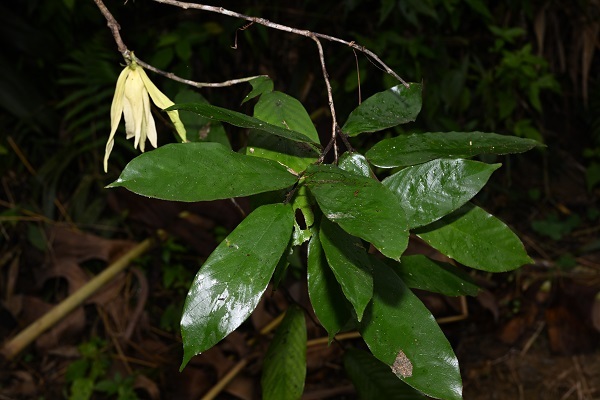
Meiogyne monogyna (Image by YANG Bin)
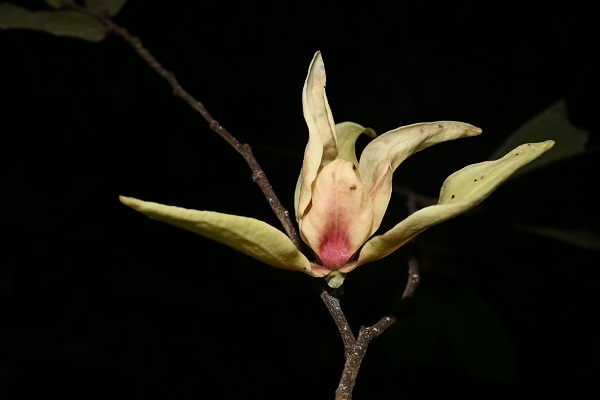
Meiogyne monogyna (Image by YANG Bin)
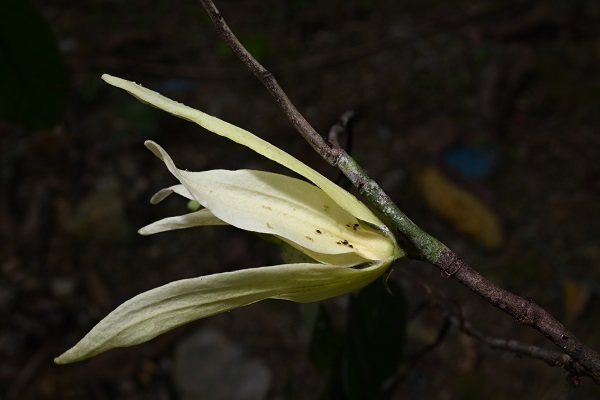
Meiogyne monogyna (Image by YANG Bin)
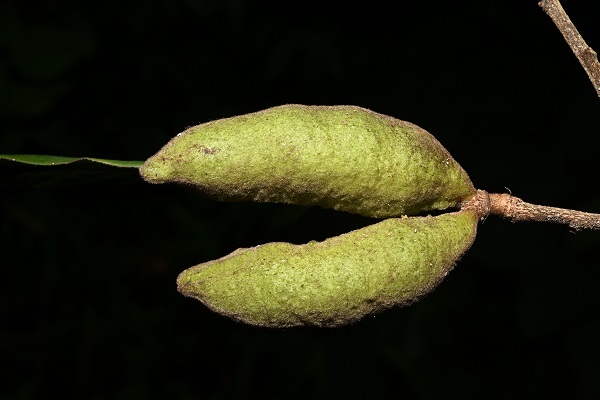
Meiogyne monogyna (Image by YANG Bin)
Published: 16 July 2026


