Mountain regions harbour some of Earth’s richest biodiversity,but their richness varies enormously. Taking the barberry genus (Berberis) as an example, the Hengduan–Himalaya Mountains (HHM) in southwestern China host approximately 247 species, while the Andes (a similar mountain system on the opposite side of the planet) in South America support only about 109. What accounts for such a disparity?
In a study published in Nature Communications,researchers from Xishuangbanna Tropical Botanical Garden (XTBG) of the Chinese Academy of Sciences and their international collaborators offer a new framework for understanding how mountain biodiversity arises and why different ranges follow distinct evolutionary paths. Their findings reveal that a synergistic combination of deciduousness and small densely veined (SDV) leaves, together with the timing of mountain uplift and climate change, explains why the Hengduan–Himalayas host far more species of barberry (Berberis) than the Andes.
The researchers integrated genomic data from 307 Berberis species with phylogenetic reconstructions, biogeographic modelling, functional trait analyses, and paleoclimate simulations to investigate how these plants responded to orogenic events and climate change over millions of years.
They found that Berberis took markedly different evolutionary routes in the two mountains. In the Hengduan–Himalaya region, the genus first evolved deciduousness (the seasonal shedding of leaves) around 22 million years ago, and later evolved small densely veined (SDV) leaves. This combination of traits proved crucial: it enabled the plants to tolerate cold, high-altitude environments and to take advantage of the ecological opportunities created by the continuing uplift of the Tibetan Plateau since the Miocene. In contrast, Andean Berberis remained evergreen throughout its history and never acquired the same suite of functional traits. Consequently, despite similar timing of mountain building, it followed a fundamentally different diversification trajectory.
To test whether trait evolution alone could explain the disparity, the researchers used paleoclimate models to project the climatic niche of HHM barberries onto South America. They found that even if deciduousness and SDV leaves had evolved in the Andes, the climatically suitable area there would have contracted substantially over time, precluding a radiation of similar magnitude. Meanwhile, in the HHM, the potential habitat for these traits either persisted or expanded during the same period.
The study highlights that biodiversity hotspots are shaped not only by intrinsic traits but also by the spatial and temporal convergence of trait evolution, tectonic activity and climate. In the Hengduan-Himalayas, the interplay of complex topography, monsoon-driven river incision and fluctuating connectivity during glacial cycles promoted repeated allopatric isolation and secondary contact, favouring ecological divergence and the accumulation of species.
“Our results show that it is not enough for a mountain to simply rise; the plants must also evolve key functional traits at the right time to exploit the new environments,” said XING Yaowu of XTBG. “When internal trait innovation and external ecological opportunity become coupled in evolutionary time, radiation can accelerate dramatically. Without that coupling, even similar orogenic histories can lead to very different outcomes.”
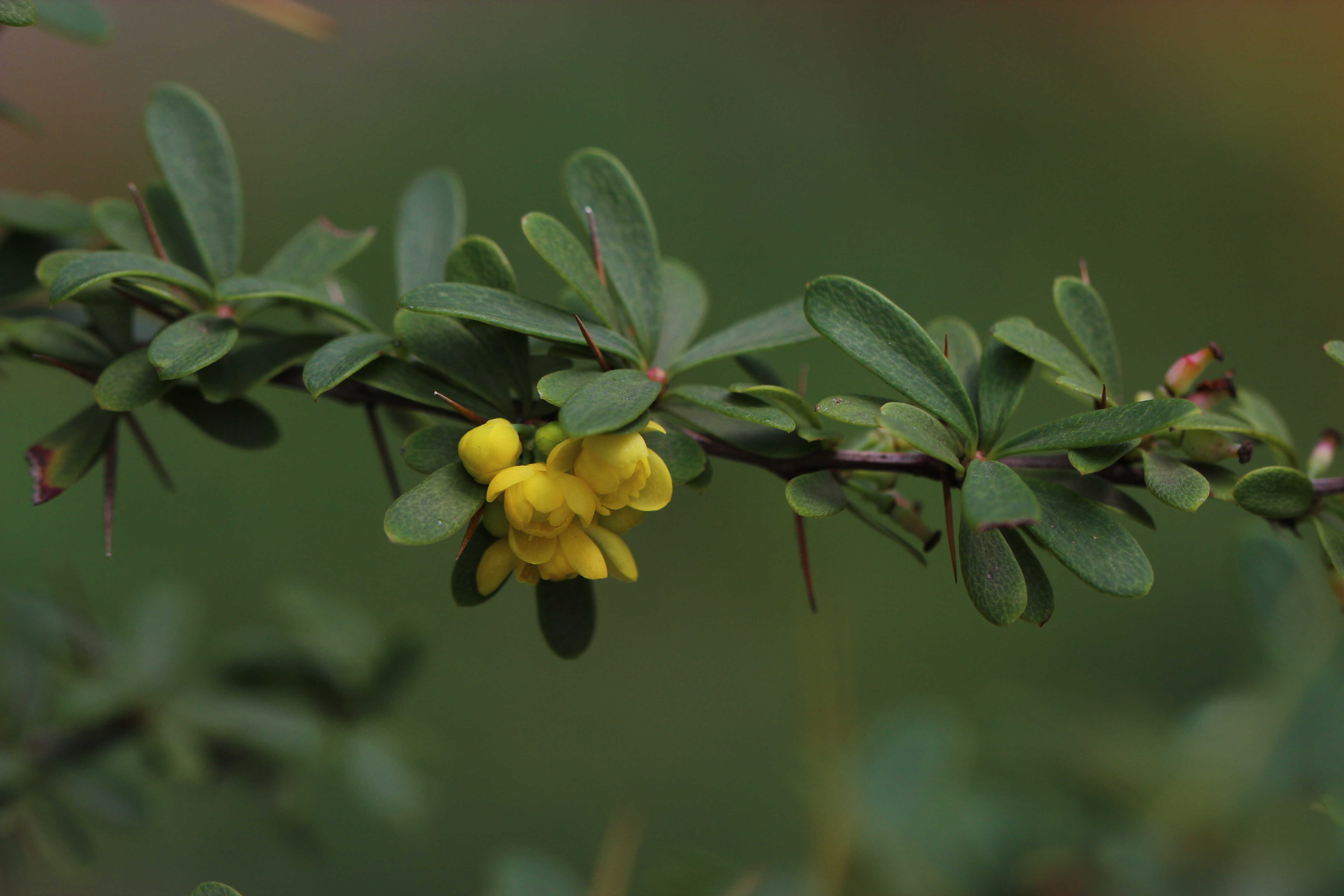
A Berberis species (Image by ZHU Renbin)
Published: 23 July 2026


