Apocynaceae is one of the ten most species-rich families of angiosperms, with 378 genera and more than 5,100 species. Most of its taxa are concentrated in tropical and subtropical regions worldwide. Marsdenieae is the third-largest tribe in the family, comprising 38 genera and about 740 species. It has a worldwide distribution but is mainly concentrated in tropical and subtropical areas.
During a field survey of the dry-hot valleys of the Red River basin in Yunnan, researchers from Xishuangbanna Tropical Botanical Garden (XTBG) and Institute of Botany of the Chinese Academy of Sciences found an Apocynaceae plant that could not be assigned to any known taxon. After careful morphological and molecular phylogenetic analyses, they confirmed that the plant represents a distinct new genus in Marsdenieae.
To honor Prof. XU Zaifu, former director of XTBG, for his long-term dedication and outstanding contributions to the conservation and utilization of tropical plants in China, the new genus was named Xua, and the new species Xua hongheensis.The findings were published in Journal of Systematics and Evolution.
Xua hongheensis is a perennial, twining herb, up to 3 m long. Its stems are slender and densely hairy, and its leaves are opposite, elliptic to broadly ovate. The flowers are small yellowish-green to yellow, and nearly wheel-shaped, with five deeply divided lobes. The most distinctive features are its fleshy, erect staminal corona lobes with concave apices. The plant also produces four-angled, spindle-shaped follicles 7–11 cm long and flat, winged seeds with a white coma.
Morphological comparisons show that Xua differs from its closest relatives. It resembles Sarcolobus in having a very short corolla tube and spreading lobes, but can be distinguished by solid shoots, peduncles 5–12 mm long, and tetragonal-fusiform follicles. Compared with six other allied genera, Xua has an almost tube-less, rotate corolla and unique erect corona lobes with concave tips.
The field surveys showed that Xua hongheensis is only sporadically distributed in dry-hot valley habitats at elevations of 350–1,200 m in the Red River basin, Yunnan. It grows in forest gaps of tropical seasonal rainforests and in the understory of savanna shrub-grasslands. The researchers preliminarily assessed the conservation status of the new genus as Data Deficient (DD) according to the IUCN Red List Categories and Criteria.
“Our study adds a new genus to Apocynaceae. More field surveys are needed to discover the endemic plant diversity of the unique and under-explored biodiversity of the dry-hot valleys of the Red River in Southwest China,” said SHEN Jianyong of XTBG.
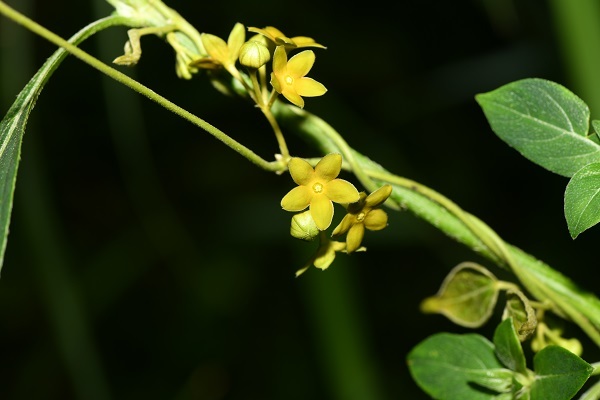
Xua hongheensis (Image by SHEN Jianyong)
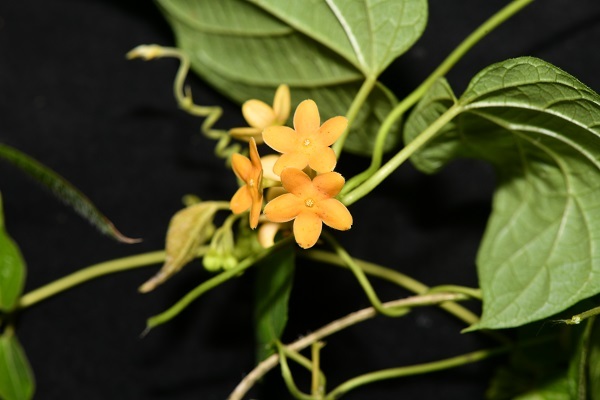
Xua hongheensis (Image by SHEN Jianyong)
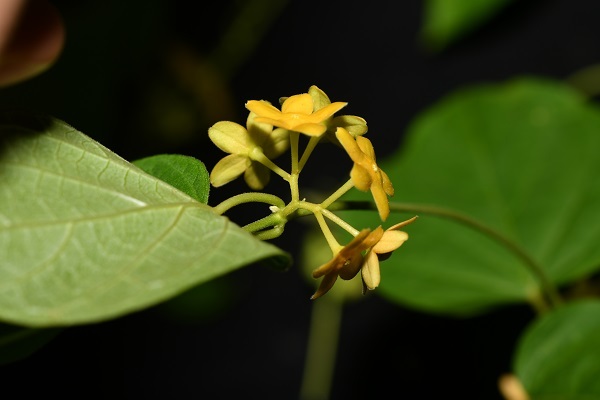
Xua hongheensis (Image by SHEN Jianyong)
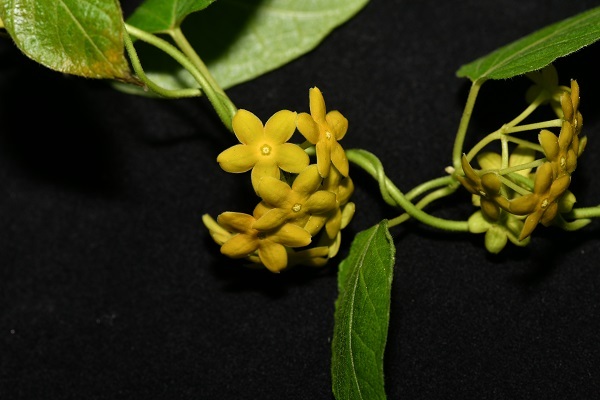
Xua hongheensis (Image by SHEN Jianyong)
First published: 15 September 2026


