Soil salinization and alkalization are major global agricultural challenges. Grain amaranth (Amaranthus cruentus) has emerged as a promising crop for salinity - and alkalinity-affected land because of its tolerance to stress. However, few studies have focused on the molecular mechanisms underlying its response to saline and alkaline stress.
In a study published in Plant Nano Biology, researchers from Xishuangbanna Tropical Botanical Garden (XTBG) of the Chinese Academy of Sciences found that foliar application of cerium oxide nanoparticles (CeNP) and zinc oxide nanoparticles (ZnONP) can significantly alleviate saline and alkaline stress in grain amaranth.
Using physiological, metabolomic, and transcriptomic analyses, the study revealed how nanoparticles enhance plant adaptability to saline and alkaline environments by modulating antioxidant defense systems, ion homeostasis, and metabolic pathways.
The researchers used Amaranthus cruentus ‘Zhongke Xian No.1’ grown hydroponically. Starting two days before stress exposure, four-week-old seedlings received five foliar sprays of 75 mg/L CeNPs or ZnONPs at three-day intervals. The plants were exposed to saline stress, alkaline stress, or unstressed control conditions.
The results showed that both stresses inhibited shoot growth, with alkaline stress causing more severe inhibition. Both stresses also caused oxidative damage. Nanoparticle application enhanced antioxidant enzyme activities and reduced oxidative damage. The treatments also modulated proline and soluble sugar accumulation, improved water status, and partially restored endogenous auxin levels under stress.
Transcriptome analysis revealed that alkaline stress triggered a stronger transcriptional disturbance than saline stress. Nanoparticle application substantially reshaped these stress-responsive patterns. Key gene networks were enriched in ion transport, reactive oxygen species detoxification, cell wall remodeling, and osmotic adjustment.
Overall, CeNP and ZnONP enhance amaranth resilience to saline and alkaline stress by coordinately regulating ion homeostasis, antioxidant defense, carbon- and hormone-related metabolism, and transport processes. CeNP was especially associated with photosynthesis, carbohydrate metabolism, zeatin biosynthesis, and glycerolipid metabolism. ZnONP more broadly influenced amino acid and secondary metabolism, flavonoid biosynthesis, and cutin/suberin/wax pathways.
“Our study provides new insights into nanoparticle–plant interactions and supports the potential of engineered nanomaterials as complementary tools for crop production in saline and alkaline environments,” said WAN Jinpeng of XTBG.
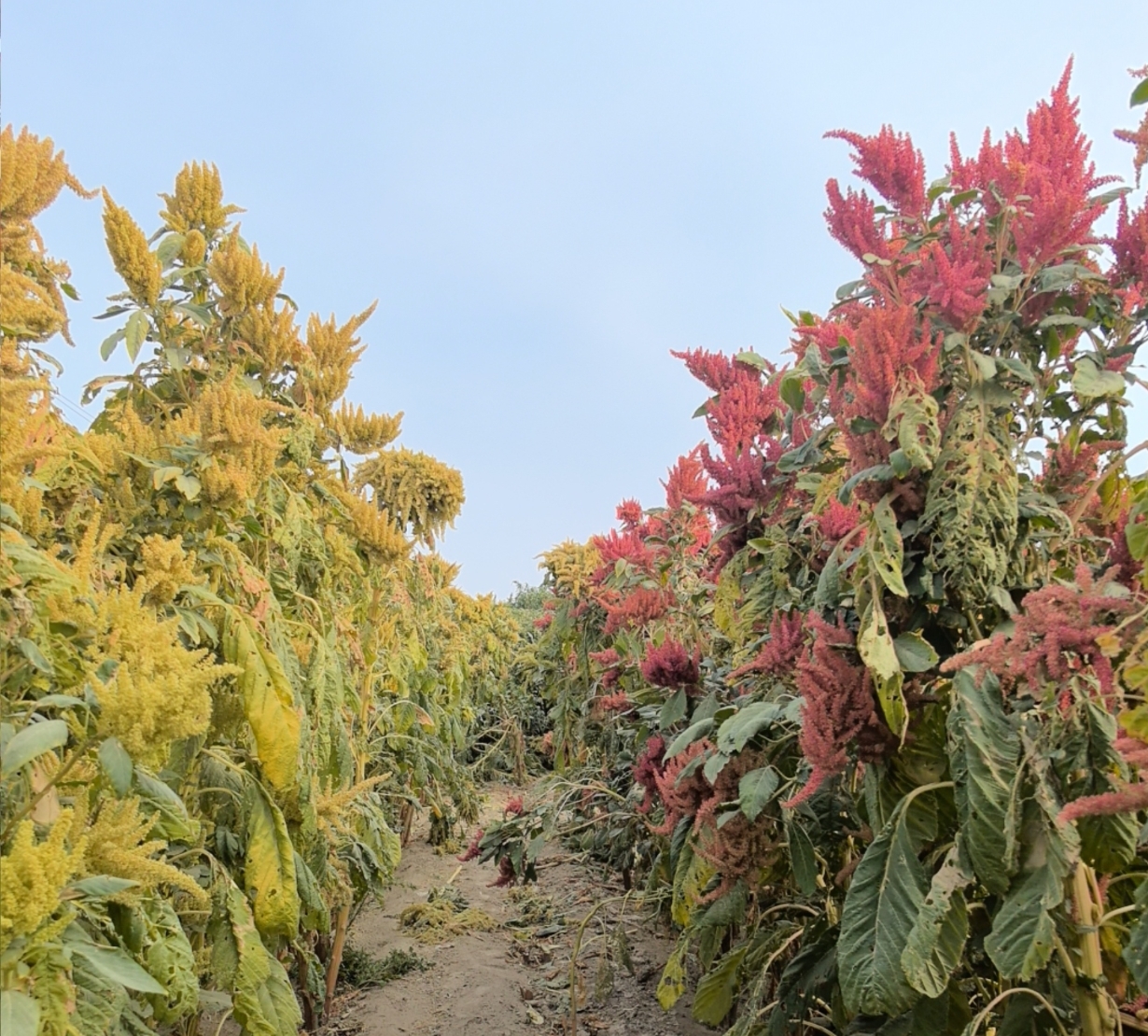
Grain amaranth at the saline-alkaline experimental site in Yuli county. (Image by WAN Jinpeng)
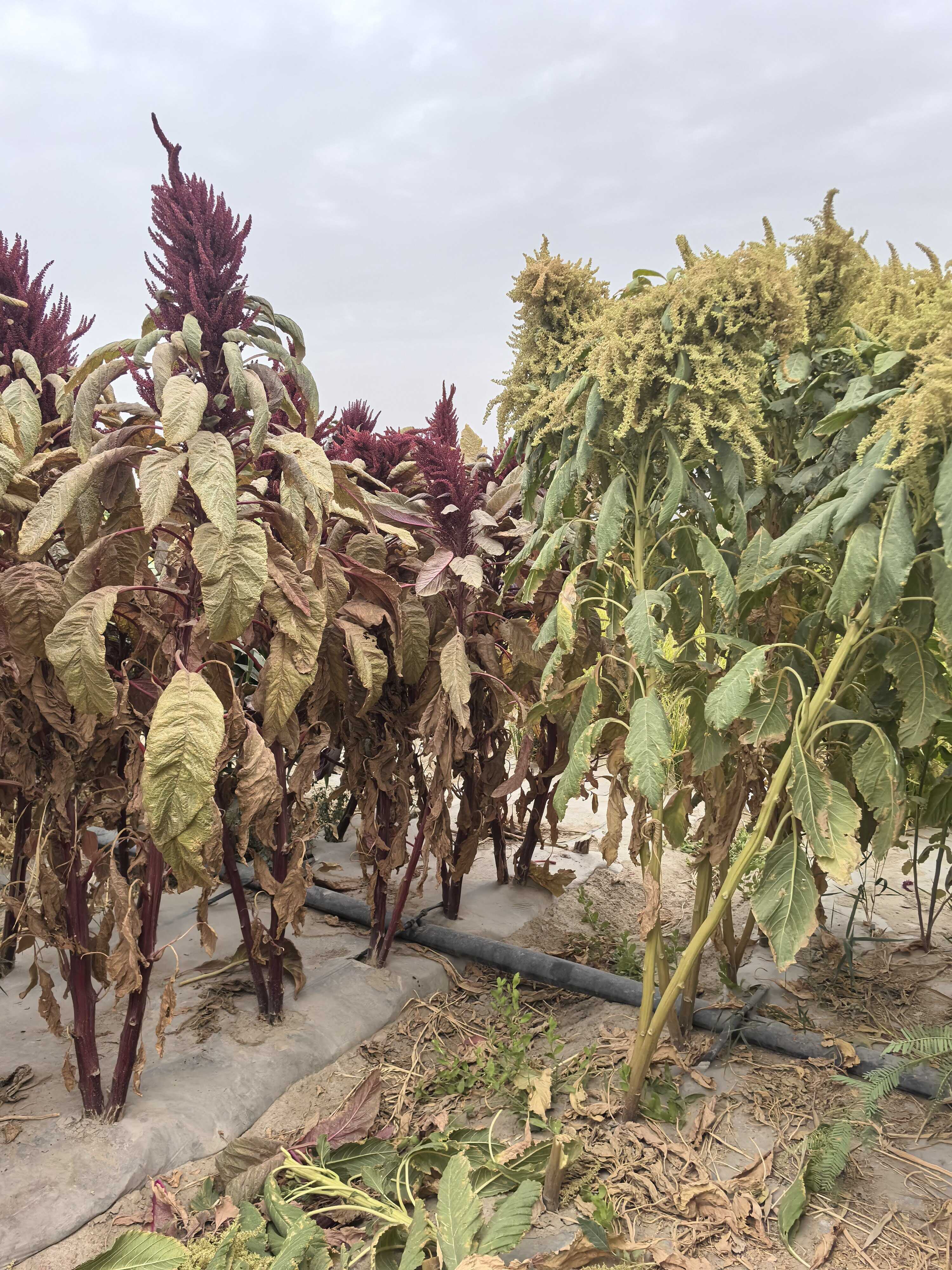
Grain amaranth at saline-alkaline experimental site in Alaer city. (Image by WAN Jinpeng)
Available online: 14 September 2026


