Plants utilize metabolites to cope with biotic and abiotic stresses. However, previous studies have focused mainly on aboveground organs, and community-level metabolomic datasets that integrate both above- and belowground organs across natural environmental gradients remain scarce. It remains unclear how organ-specific selective pressures and resource constraints interact to shape whole-plant chemical strategies.
In a study published in New Phytologist, researchers from Xishuangbanna Tropical Botanical Garden (XTBG) of the Chinese Academy of Sciences have uncovered striking differences in how tree leaves and roots adjust their chemical composition along an elevational gradient. Leaves and roots of the same tree can have strikingly different chemical profiles and these organ-specific strategies shift systematically from tropical to subtropical and subalpine forests.
The researchers used untargeted metabolomics to characterize the chemical diversity and physicochemical properties of leaves and roots from 183 tree species across tropical, subtropical, and subalpine forests. They integrated these data with measurements of aboveground herbivory, soil conditions, plant diversity, and phylogenetic relationships.
They found that leaf and root metabolomes were significantly different in every forest type, with limited overlap between organs. Root chemistry also showed stronger differentiation among forest types than leaf chemistry, with subalpine roots particularly distinct from tropical and subtropical roots.
Phytochemical alpha diversity (i.e. the diversity of chemical compounds within a plot) declined with increasing elevation in both leaves and roots. However, root chemistry varied more among plots across the landscape.
The researchers also examined how phytochemical diversity relates to biotic and abiotic factors. They found that leaf chemical diversity was positively correlated with the proportion of damage caused by specialist herbivores. In contrast, both leaf and root chemical diversity were negatively correlated with soil nutrient availability, indicating that biotic and abiotic factors jointly shape phytochemical diversity.
In low-elevation tropical forests, leaves contained a higher proportion of relatively polar, potentially fast-turnover, and low-cost metabolites. As elevation increased, leaf chemistry shifted toward more aromatic, structurally rigid, and potentially more costly metabolites. Roots showed the opposite trend, and subalpine roots produced larger molecules.
“Our results indicate that plant chemical strategies do not change synchronously across the whole plant. Instead, they are shaped jointly by organ function and ecological context,” said YANG Jie of XTBG.
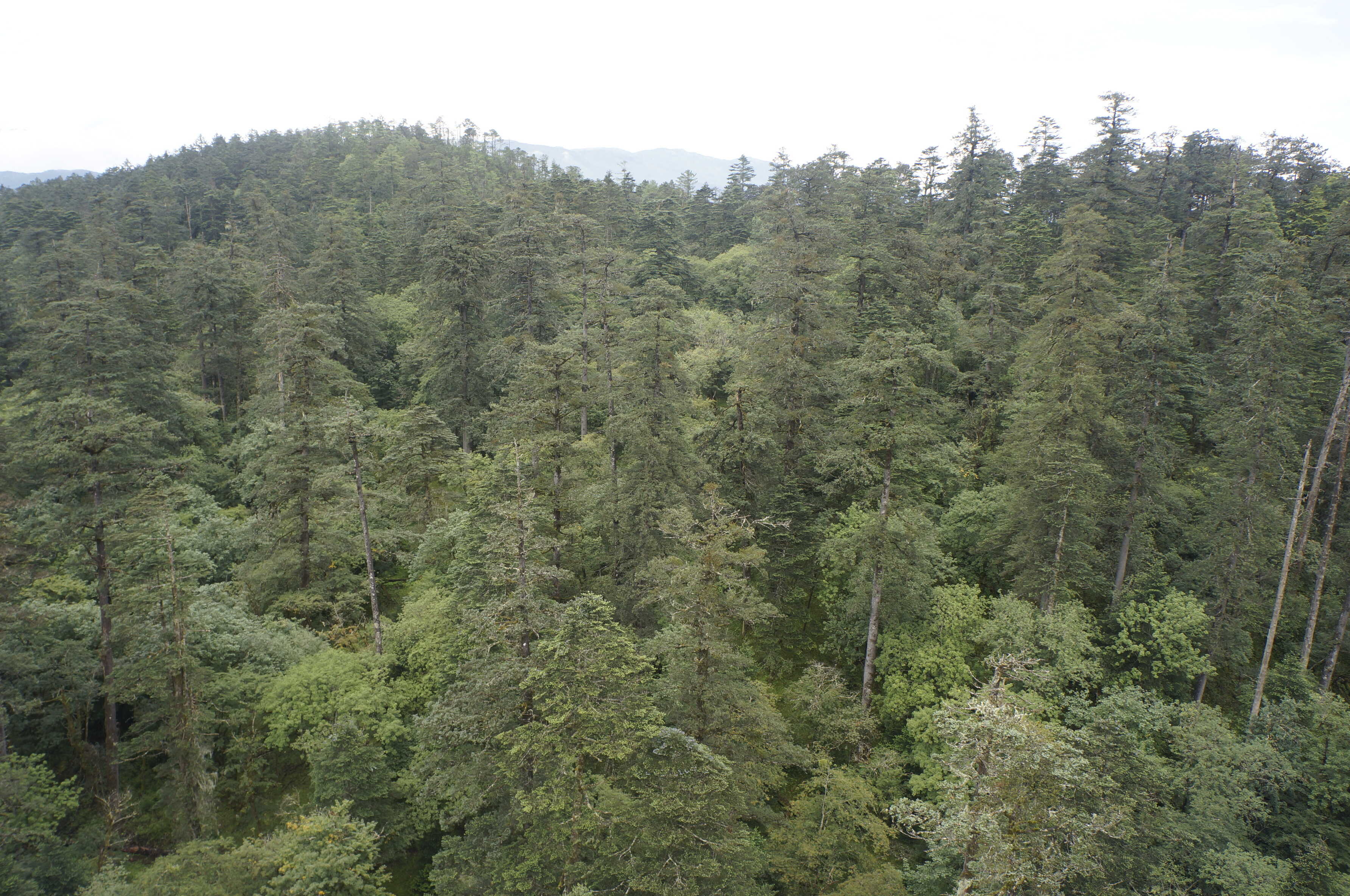
Subalpine froest. (Image by HUANG Hua)
First published: 22 September 2026


