Stahlianthus involucratus is a medicinal herb native to southwestern China and has traditionally been used to treat inflammation. Previous studies showed that its ethanol extract exhibits anti-adipogenic activity in cell models. However, the bioactive constituents responsible for this activity, the extract’s in vivo anti-obesity effects, and the associated structure–activity relationships remained unclear.
In a study published in Bioorganic Chemistry, researchers from the Xishuangbanna Tropical Botanical Garden (XTBG) of the Chinese Academy of Sciences and their collaborators identified oxygenated, aromatic cadinane-type sesquiterpenoid dimers (CSDs) from Stahlianthus involucratus as a new class of natural compounds with significant anti-obesity potential.
Using bioactivity-guided fractionation, the researchers isolated 13 oxygenated, aromatic cadinane-type sesquiterpenoid dimers (CSDs, 1–13) from the JST-80% fraction of the ethanol extract of Stahlianthus involucratus; eight of these (1–8) were new compounds. Notably, compounds 1–3 possessed unique carbon-deficient skeletons and rare pyran-4-one C-ring structures.
Anti-adipogenic screening in 3T3-L1 preadipocytes showed that compound 13 (parviflorene A) exhibited the strongest anti-adipogenic activity and was selected for further study because of its high abundance in the plant. In vivo experiments showed that oral administration of compound 13 significantly improved obesity-related phenotypes in high-fat diet-induced obese mice: it inhibited weight gain, lowered serum triglyceride and cholesterol levels, and alleviated hepatic steatosis and white adipose tissue hypertrophy, with no significant hepatorenal toxicity observed.
Mechanistically, compound 13 simultaneously inhibited fat synthesis and enhanced energy-burning thermogenesis.
The researchers proposed plausible biosynthetic pathways for these novel compounds, suggesting that they originate from cadinane-type sesquiterpenoid monomers via hetero-Diels–Alder reactions followed by various oxidation and decarboxylation steps.
The study revealed for the first time that aromatic cadinane-type sesquiterpenoid dimers are the primary active components in Stahlianthus involucratus and validated their potential as functional foods or drugs for obesity intervention.
"Our research not only expands the application of traditional Chinese medicine in metabolic diseases but also provides a scientific basis for developing natural product-based anti-obesity strategies," said JI Kailong of XTBG.
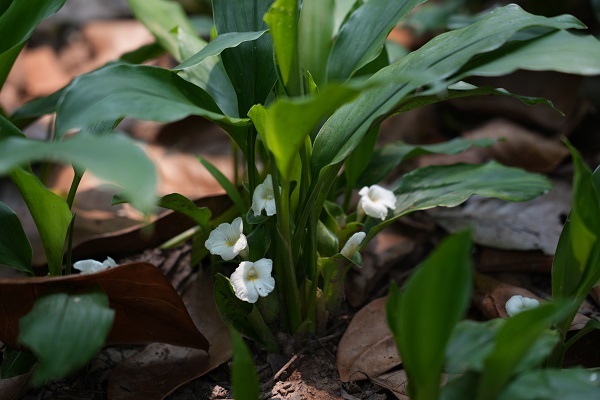
Stahlianthus involucratus (Image by LU Jianmei)
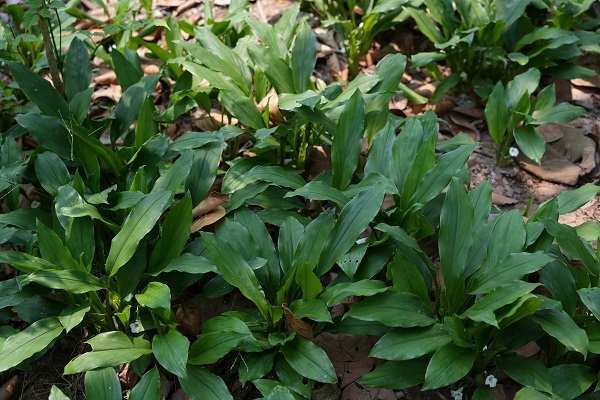
Stahlianthus involucratus (Image by LU Jianmei)
Available online: 14 September 2026


