-
Micro/Nanoplastics profoundly impact terrestrial ecosystem functioningResearchers from Xishuangbanna Tropical Botanical Garden (XTBG) and their collaborators tried to fill the knowledge gap of the uncertainty about the effects of micro/nano plastics on multi-trophic biological interactions and ecosystem functions, especially on plants and aboveground-underground (AG-BG) food webs.They made a comprehensive overview of MNPs ingestion, bioaccumulation, and the ecotocicological endpoints on plants and the associated key AG-BG biota across trophic level.Dec 30, 2024
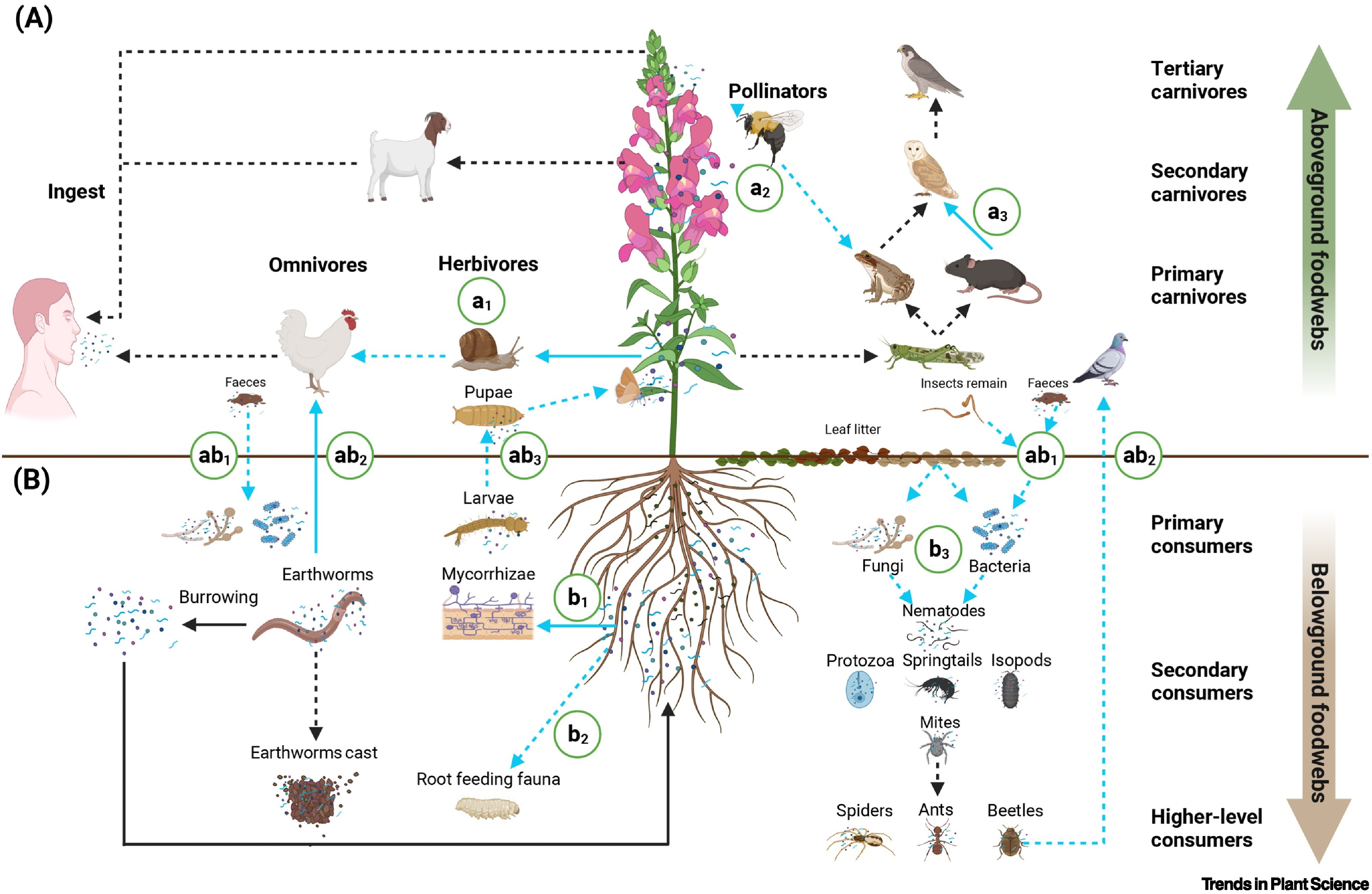 Micro/Nanoplastics profoundly impact terrestrial ecosystem functioning" title="Micro/Nanoplastics profoundly impact terrestrial ecosystem functioning" />
-
Study provides possible prioritization for upcoming conservation actions of amphibians in MyanmarDec 27, 2024
-
Targeted Interventions Are Necessary for Each Threatened Species: StudyDec 25, 2024
Targeted Interventions Are Necessary for Each Threatened Species: Study" title="Targeted Interventions Are Necessary for Each Threatened Species: Study" />
-
Biotic factors contribute more to aboveground biomass across scalesResearchers from Xishuangbanna Tropical Botanical Garden (XTBG) and their collaborators sought to examine how biotic factors (including forest structure attributes, community-weighted mean of traits, and functional diversity) and abiotic factors (such as topography and soil properties) affect the aboveground biomass at two spatial scales (i.e., 20 m × 20 m and 50 m × 50 m) in a tropical seasonal rainforest in southwestern China.Dec 19, 2024
Biotic factors contribute more to aboveground biomass across scales" title="Biotic factors contribute more to aboveground biomass across scales" />
-
Spatio-temporal dynamics of insect diversity is highly context-dependentDec 13, 2024
Spatio-temporal dynamics of insect diversity is highly context-dependent" title="Spatio-temporal dynamics of insect diversity is highly context-dependent" />
-
Study provides insight to origin and evolution of flora and fauna in Hainan IslandProf. ZHU Hua of Xishuangbanna Tropical Botanical Garden (XTBG) recently addresssed the issue of origin and evolution of biota in Hainan Island, China. Through comparative studies of biotic groups, geological structures and palaeomagnetism, it is suggested that Hainan Island was connected to Vietnam and Guangxi during the Eocene, and subsequently moved southeastward to its current position.Dec 09, 2024
-
Palms Disperse from India Plate to Southern Tibet: Fossil EvidenceResearchers from Xishuangbanna Tropical Botanical Garden (XTBG) and Chengdu University of Technology recently discovered many late Paleocene palm leaf fossils from Lazi County, southern Tibetan Plateau. This discovery provides new and compelling evidence that the Kohistan-Ladakh Island Arc (KLIA) served as a key series of steppingstones for the dispersal of palms from the India Plate to southern Tibet.Dec 06, 2024
-
Researchers present first chromosome-level and haplotype-resolved genome assembly of Dracaena cambodianaDec 03, 2024
-
Study Reveals Climate Change-induced Changes in Geographic Patterns of Threatened Chinese Timber TreesResearchers from Xishuangbanna Tropical Botanical Garden (XTBG) and their collaborators systematically assessed the changes in the diversity patterns of 110 threatened timber tree species in China under the background of climate change and the effectiveness of existing protected areas (PAs).Dec 03, 2024
-
Dopamine Mediates Fear Response of Honeybees to PredatorsResearchers from Xishuangbannna Tropical Botanical Garden (XTBG) and the University of California, San Diego showed that the fear response of honeybees to predators was mediated by dopamine, and this response not only increased the alertness of honeybees but also affected their cognitive abilities.Nov 22, 2024
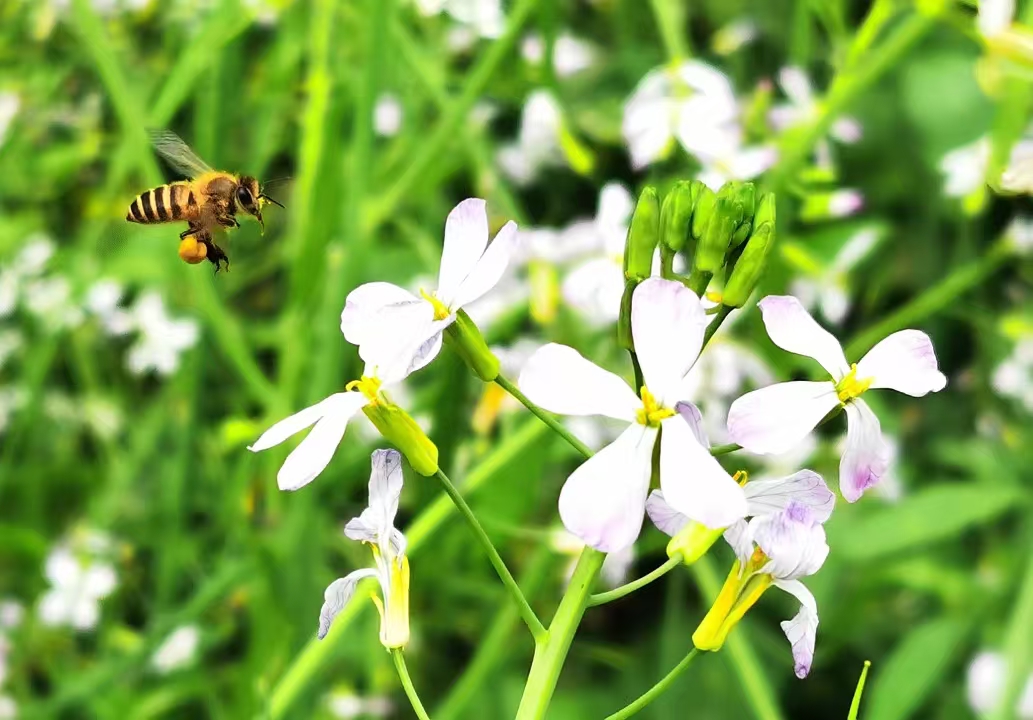 Dopamine Mediates Fear Response of Honeybees to Predators" title="Dopamine Mediates Fear Response of Honeybees to Predators" />
-
Tree-ring widths of Pinus latteri: effective tool for studying long-term hydroclimatic variability in southern LaosUsing tree-ring width data of Pinus latteri from three sites in southern Laos, researchers from Xishuangbanna Tropical Botanical Garden (XTBG) developed a new regional composite chronology and reconstructed the hydroclimatic variability during 1885–2019. They showed that tree-ring widths of Pinus latteri in southern Laos were an effective tool for studying long-term hydroclimatic variability in the region.Nov 20, 2024
-
Mistletoes and their hosts diverge in hydraulic strategiesResearchers from Xishuangbanna Tropical Botanical Garden (XTBG) and their collaborators investigated the water transport characteristics of mistletoes and their host plants under different drought environments. They tried to discern the adaptive strategies of mistletoes and their hosts along a gradient of aridity index (proxy of diverse water and temperature conditions), focusing on xylem traits related to plant hydraulic functions.Nov 18, 2024

